Deisseroth, Hegemann and Nagel Win Nobel Medicine Prize for Controlling Brain Cells With Light
The 2026 Nobel Prize in Physiology or Medicine honors three scientists whose work on light-gated ion channels created optogenetics, a method now used worldwide to switch individual nerve cells on and off in the living brain.
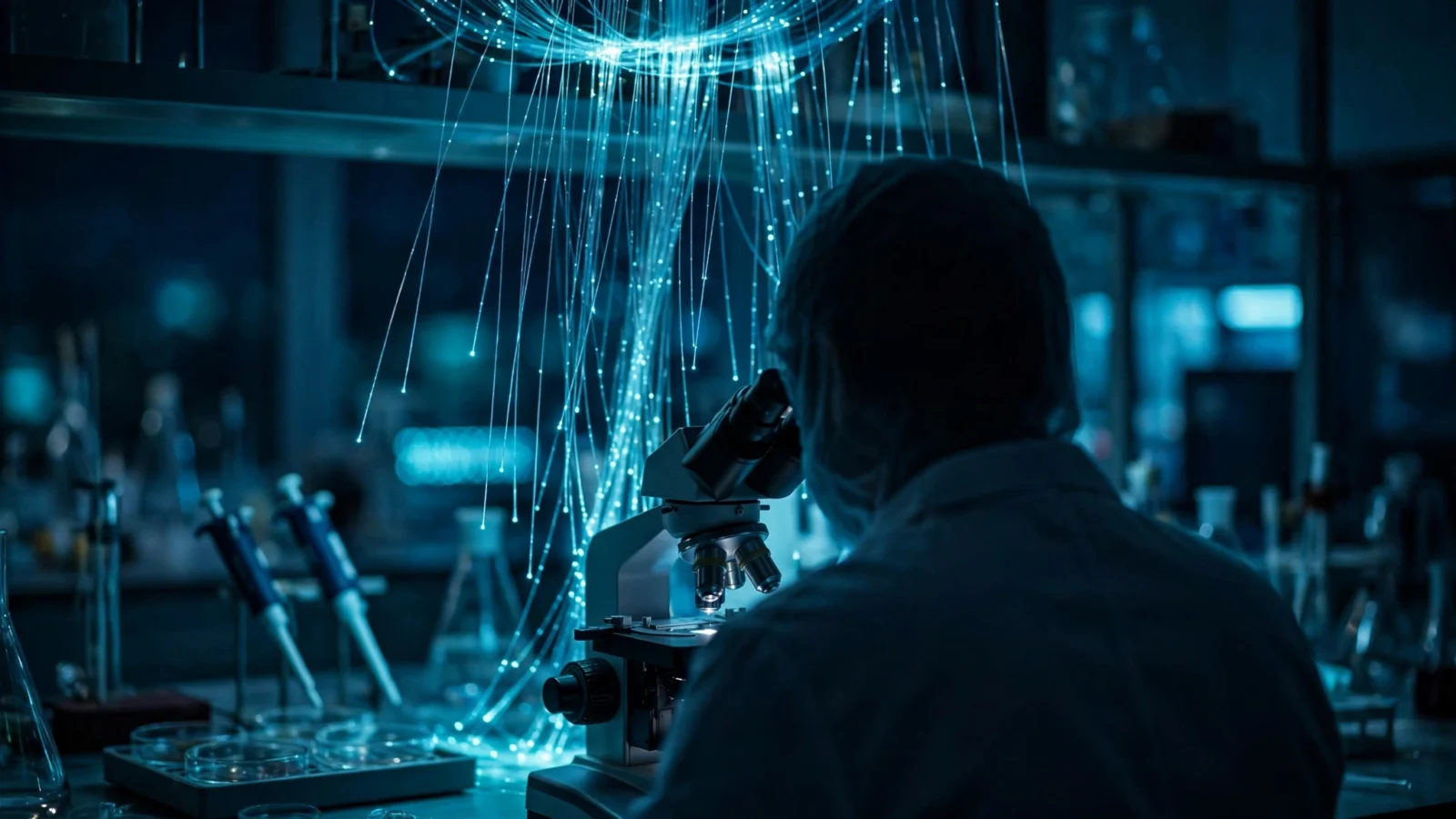
The 2026 Nobel Prize in Physiology or Medicine was awarded on Monday to Karl Deisseroth of the United States and Peter Hegemann and Georg Nagel of Germany, honoring work that gave scientists a way to switch individual nerve cells on and off using light.
The Nobel Assembly at Sweden’s Karolinska Institute cited the trio for discoveries concerning light-gated ion channels and optogenetics. The three will share a prize of 12 million Swedish crowns, about $1.2 million. Deisseroth, 54, is based at Stanford University; Hegemann, 71, is at Humboldt University of Berlin; and Nagel, 73, is at the University of Würzburg.
From algae to the living brain
The path to the prize began with a basic question about algae. In the 1990s, Hegemann studied how the single-celled alga Chlamydomonas swims toward light and traced the behavior to a light-sensitive protein. Working with Nagel, he showed that the protein, named channelrhodopsin, acts as a channel that opens when struck by light, letting ions flow across a cell membrane and generate an electrical signal; the pair published key findings in 2002 and 2003.
Deisseroth then carried the idea into neuroscience. In 2005, his team engineered nerve cells to produce the protein, making it possible to activate chosen neurons simply by shining light on them. The technique, formalized as optogenetics in 2006, is now used in laboratories around the world to map which groups of neurons drive specific behaviors, memories and sensations.
Nobel week begins
The medicine award traditionally opens the annual round of Nobel announcements. The physics prize follows on Tuesday and chemistry on Wednesday, with literature, peace and economics announcements later in the week. The laureates will receive their awards at ceremonies in Stockholm on December 10, the anniversary of Alfred Nobel’s death; the Peace Prize is presented separately in Oslo.
Last year’s medicine prize went to Mary Brunkow and Fred Ramsdell of the United States and Shimon Sakaguchi of Japan for research on how the immune system avoids attacking the body’s own healthy cells.
Reporting based on coverage by Reuters and New Scientist.