Seven Ships Attacked in Strait of Hormuz in a Week as Iran Warns Tankers Off U.S. Route
A renewed wave of attacks around the narrow waterway, reported by British maritime authorities and claimed by Iran's Revolutionary Guards, is threatening a costly recovery that had pushed Gulf crude exports back toward prewar levels.
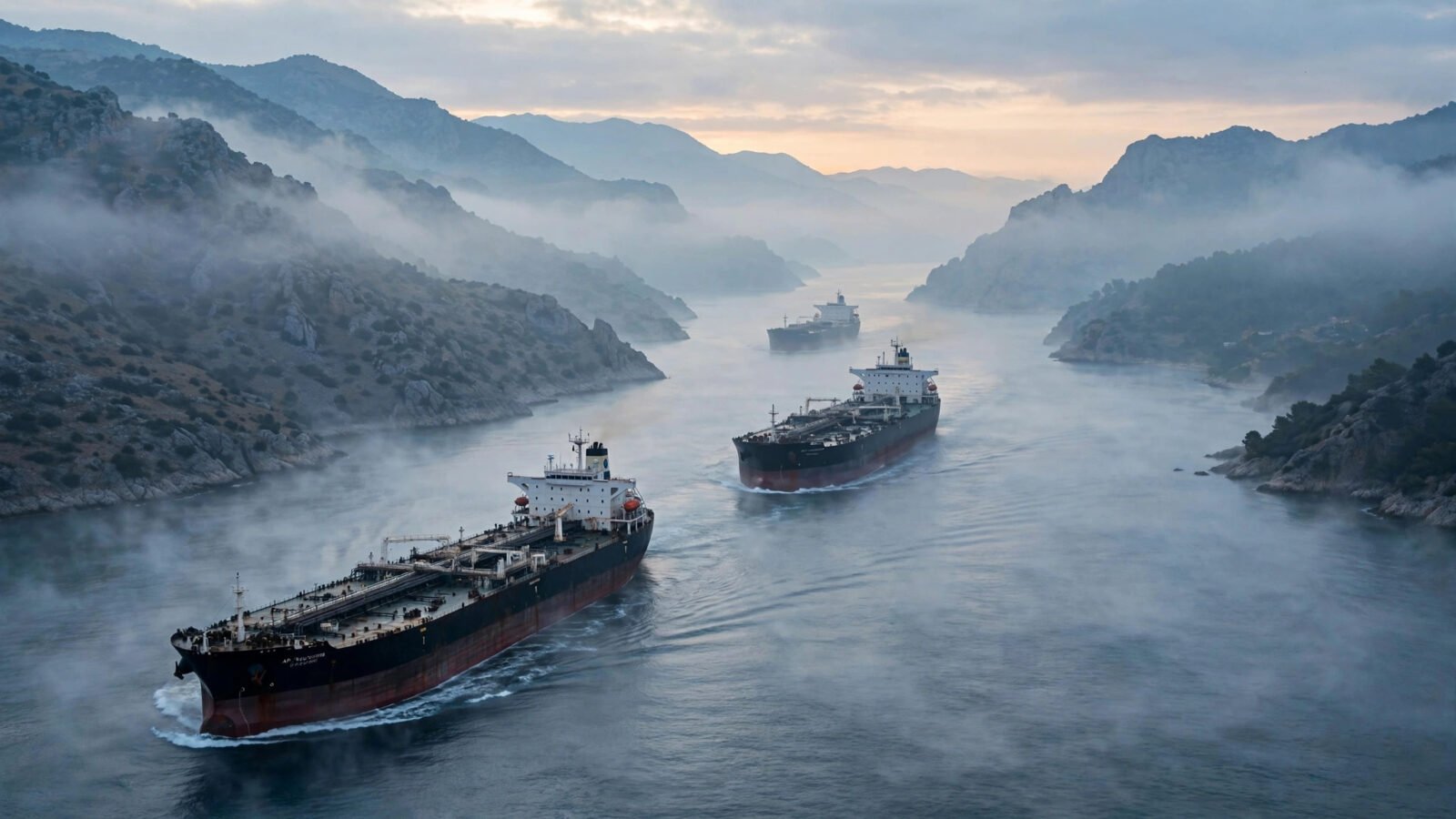
At least seven vessels have been attacked around the Strait of Hormuz since Sept. 28, according to the United Kingdom Maritime Trade Operations, in a renewed campaign that is threatening a fragile recovery in Gulf oil exports and testing Washington’s claim to control the waterway.
The attacks have all taken place near the narrowest part of the strait, the British agency said, according to The Wall Street Journal. Separately, Iran’s semi-official Fars news agency said the navy of the Islamic Revolutionary Guard Corps had targeted at least seven tankers it described as “violating” in the past five days, more than one a day, according to reporting by IANS.
The Revolutionary Guards warned ships on Saturday not to use a U.S.-backed route through the strait, saying vessels that did so would be targeted and destroyed, according to a radio message on a public shipping channel reviewed by the Journal. “Don’t trust U.S. Navy and don’t use south corridor at all and don’t put your life in danger,” the message said.
Shuttle tankers among those hit
Among the vessels attacked in the past week, at least four had completed two or more round trips in and out of the strait since June carrying crude or oil products, according to ship tracker Kpler, cited by the Journal. Al Funtas, a very large crude carrier operated by Kuwait Oil Tanker Company, was on its fifth shuttle run between Kuwait and ports in the Gulf of Oman when it was attacked on Sept. 28, Kpler said. Kazimah III, another Kuwaiti carrier of the same class, had made three shuttle runs and was heading into the Persian Gulf when it was hit on Oct. 1.
Reuters reported on Oct. 1, citing shipping intelligence service Marisks, that three Liberian-flagged tankers were struck by unknown projectiles while transiting the strait on Tuesday with their transponders switched off. Fars, citing an independent military observer, named those vessels — Al Ruwais, Mersin Prosperity and Sinbad — alongside the two Kuwaiti carriers, and said two more tankers were hit on Friday, one near the strait’s entrance and another while exiting, according to IANS.
A recovery built at enormous cost
The attacks come after Gulf producers, through an elaborate shuttle system, had pushed shipments back toward prewar levels. Tankers load inside the Persian Gulf, exit Hormuz and transfer crude to vessels waiting outside, while other cargoes bypass the strait through pipelines. Kpler said regional crude exports excluding Iran averaged at least 16.5 million barrels a day from Sept. 1 through Sept. 28, close to prewar levels, according to the Journal.
That pace may already be slipping. Rory Johnston of Commodity Context estimated flows have fallen by 2 million to 3 million barrels a day in recent days. Gulf producers are paying $30 million to $40 million for a round-trip shuttle run, or $15 to $20 a barrel before insurance, according to shipbrokers cited by the Journal. Brent crude settled Friday at $102.25 a barrel, up nearly 5% for the week, the Journal reported. “The step-up in attacks on ships highlights how the current equilibrium in the oil market is fragile and could easily be shattered,” said Hamad Hussain of Capital Economics.
President Donald Trump, who has claimed full U.S. control of Hormuz, said Saturday in Texas that the war with Iran would end “very quickly” and that oil prices would then “drop like a rock,” portraying Iran as militarily and economically weakened, according to IANS. The Journal reported that Trump is weighing renewed military action, and that a U.S. official said Iran’s ability to target ships has improved in recent weeks.
Since U.S. and Israeli strikes began the war in February, Iran has used attacks on shipping to squeeze traffic through a waterway that once carried about a fifth of the world’s oil, according to the Journal. The disruption has driven up gasoline and diesel prices worldwide and forced Saudi Arabia and the Emirates to divert more exports around the strait.
Reporting based on coverage by The Wall Street Journal, Reuters and IANS.