Checking Account vs. Savings Account: What Each One Does, and Which You Need
A checking account handles daily spending and bills, while a savings account holds money set aside to earn interest. Here is how they differ, what each costs, and which one fits each use.

Banks offer the two accounts side by side, and on a statement they look much the same. Each holds dollars at the same bank, and deposits in both carry the same federal insurance, up to $250,000 per depositor, per bank, per ownership category. The split is about purpose. A checking account moves money in and out every day. A savings account holds money in place until it is needed.
How a checking account works
A checking account is the account for daily money. A paycheck usually lands here by direct deposit, and rent, groceries, and bills go out by debit card, check, or automatic payment. Money moves often and fast, which is the point: the account is built for transactions, not for holding a balance.
Most checking accounts pay little or no interest. Many charge a monthly fee, often waived when the account receives regular direct deposits or keeps a minimum balance. The fee to watch is the overdraft fee. If spending passes the balance, the bank may cover the payment and charge a fee, often $30 or more per item, and fees vary by bank.
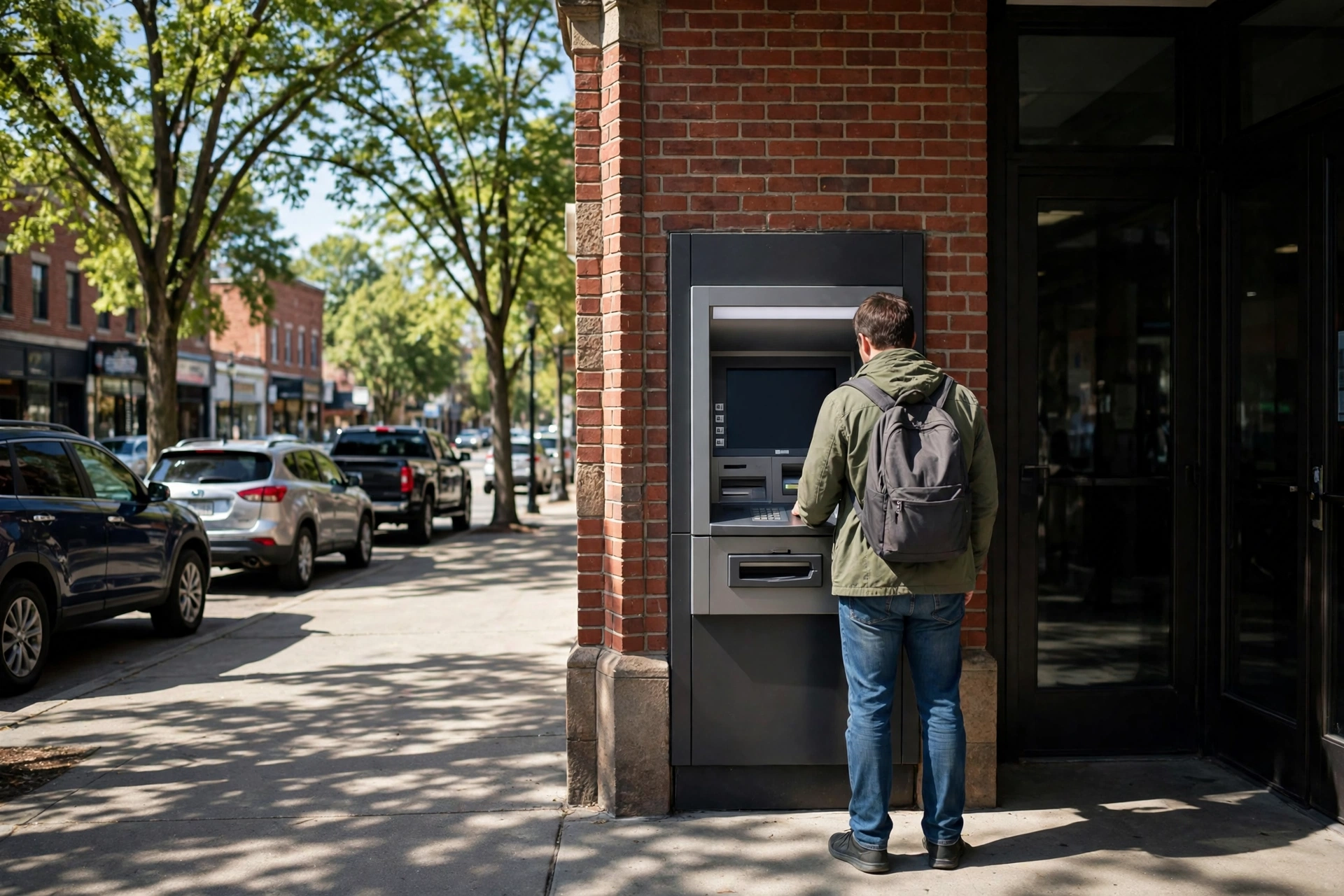
People reach a checking account with a debit card, a paper check, or a transfer. ATMs take cash out, and branches and apps move money in and out the same day.
How a savings account works
A savings account holds money set aside for an emergency, a down payment, or a trip. The bank pays interest on the balance, quoted as an annual percentage yield. Rates move with the market, so the rate on an account today is not a promise for next year.

Getting money out takes a little longer. Transfers to a checking account usually arrive within a day, and some savings accounts allow ATM withdrawals. The Federal Reserve removed the old federal rule that capped savings withdrawals at six a month in 2020, though some banks still set their own limits, so the account terms are worth reading before opening one.
Most savings accounts have no debit card and no checks, which is part of the design: the friction keeps the money set aside instead of spent.
Checking account vs. savings account
| Checking account | Savings account | |
|---|---|---|
| What it is | An account for daily spending and bill paying | An account for holding money set aside for later |
| Who can open one | Any adult with identification; minors usually need a joint account with an adult | Same; minors usually need a joint account with an adult |
| Costs | Monthly fee at many banks, often waived with direct deposit or a minimum balance; overdraft fees apply | Usually no monthly fee, or a low one often waived with a minimum balance; some banks charge for excess withdrawals |
| Pros | Money moves fast; debit card, checks, and bill pay; direct deposit lands here | Earns interest; keeps money for later separate from money for spending |
| Cons | Pays little or no interest; overdraft fees add up fast | Slower to reach in a pinch; interest rates change |
Which one do you need
Choose checking first if you need a place for your paycheck and a way to pay bills. Anyone who pays rent or buys groceries with a card needs one.
Choose savings if you want money set aside for emergencies or a goal, and want it to earn interest while it waits.

Many people keep both, linked at the same bank, and move money between them as plans change. The checking account covers the week; the savings account covers the year.
Explainer based on consumer guidance published by the Consumer Financial Protection Bureau and the Federal Deposit Insurance Corporation, and on Federal Reserve rules for savings account withdrawals.