Trump Threatens a Tax on Data Centers Built Abroad and Says Putin Wants to End the Ukraine War
In his first public remarks since the trilateral summit in Shenzhen, the president said American companies would face "a tremendous tax" for building data centers overseas, defended his warm words for Vladimir Putin and said China is building nuclear weapons "hot and heavy."
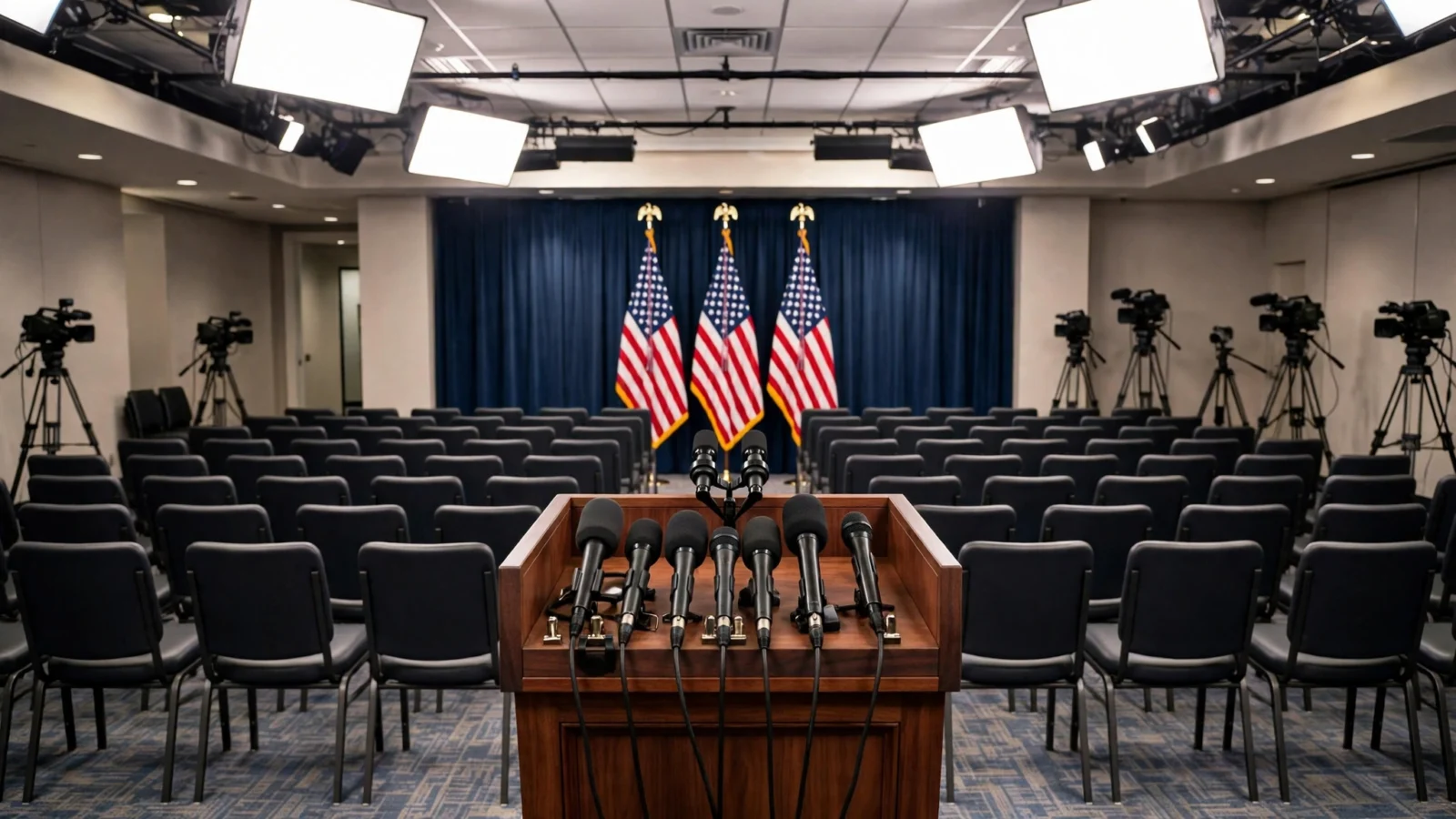
President Donald Trump used his first White House news conference since returning from Asia on Friday to warn American companies against building data centers overseas, defend his praise for Russian President Vladimir Putin and describe China’s nuclear buildup in stark terms.
Trump said companies that build data centers in other countries would face “a tremendous tax.” “We’re not allowing data centers to go into other countries,” he said during the briefing. He gave no details of the plan and said he had not yet told his own officials about it.

The president, flanked by Vice President JD Vance and Secretary of State Marco Rubio, called his four-day trip “one of the most successful presidential visits to Asia in American history.” The trip ended with the first trilateral meeting of the leaders of the United States, China and Russia, held Thursday at a lakeside resort in Shenzhen.
Putin and the war in Ukraine
Trump doubled down on his claim that Putin would “love” to end the war in Ukraine, hours after Russia carried out a major nighttime bombardment of Ukraine. A reporter noted that Putin had left recent peace talks only to launch more attacks.
“He’d love to end the war,” Trump said. “It’s a very hard thing to do, to be honest. You have two guys that don’t know how to end it. We’re trying to help them. You have two people that hate each other,” he said, referring to Putin and Ukrainian President Volodymyr Zelenskyy.
Trump said Putin told him during their meeting that he wanted the war to end “by diplomatic means,” and added, “I think there’s a real good chance that we can get it done.” Fighting continued Friday: Polish Prime Minister Donald Tusk said a Russian missile’s crash in Poland was likely an intentional provocation timed to European military drills elsewhere in the country, and Russian attacks in Ukraine killed three people and injured nine, according to the Associated Press.
Trump also defended calling Putin his “friend” during the trip. “I consider him to be somebody that I have a very good relationship (with),” he said. “It’s actually very good.”
Trade deals, chips and China
Trump announced trade agreements with Thailand and the Philippines, saying Thailand agreed to eliminate tariffs on American products and buy at least $2.6 billion in American farm goods each year.

The White House said the trip produced more than $17 billion in commercial agreements, including Philippine Airlines’ purchase of 20 Boeing 787 Dreamliners with General Electric engines, which Trump said would support 47,000 American jobs.

On artificial intelligence, Trump said he and Chinese President Xi Jinping agreed to “joint guardrails” in the race to build advanced systems. Trump said Xi liked his term “super intelligence” rather than artificial intelligence. “Problem is, it may be too super. So, President Xi and I agree that we’re going to do some joint guardrails, the two of us,” he said.
Trump said only older American chips should be sold to China. “We want only older chips, and we don’t mind if none go, but only older,” he said. “China makes chips too, and if we’re not going to sell them, they’ll make them themselves.”
Trump also said China is building nuclear weapons at a pace that is “hot and heavy.” “They’ll catch us within 10 years,” he said. China is estimated to have several hundred nuclear weapons, while the United States and Russia each have several thousand. The three governments agreed Thursday to talks on reducing nuclear risks and preventing proliferation.
The president also addressed two personnel matters. He said former national cyber director Sean Cairncross “was not good enough,” explaining why he fired him this week after a series of widespread service outages. And he said he would like to see former Nvidia chief executive Jensen Huang “make a big apology” and return to the company he founded. Huang resigned last week after reports of extramarital affairs, including one the New York Times reported was with a businesswoman American intelligence officials suspect is a Chinese spy, a claim Beijing denies. Huang has said he would be open to returning; Nvidia has rejected the offer, and Huang has agreed to testify before Congress.
On Iran, Trump said Tehran wants a deal but not one acceptable to him. “We want to make a real deal, not a fake deal that they’ve been doing for 51 years,” he said, and defended the decision to go to war, saying he would do it again “because we cannot allow Iran to have a nuclear weapon.”
Reporting based on coverage by NPR and Scripps News.