BepiColombo Enters Orbit Around Mercury After Eight-Year Journey
The European-Japanese mission slipped into orbit around the solar system's innermost planet on Saturday, eight years after launch, and will split into two orbiters next month before science work begins in April 2027.
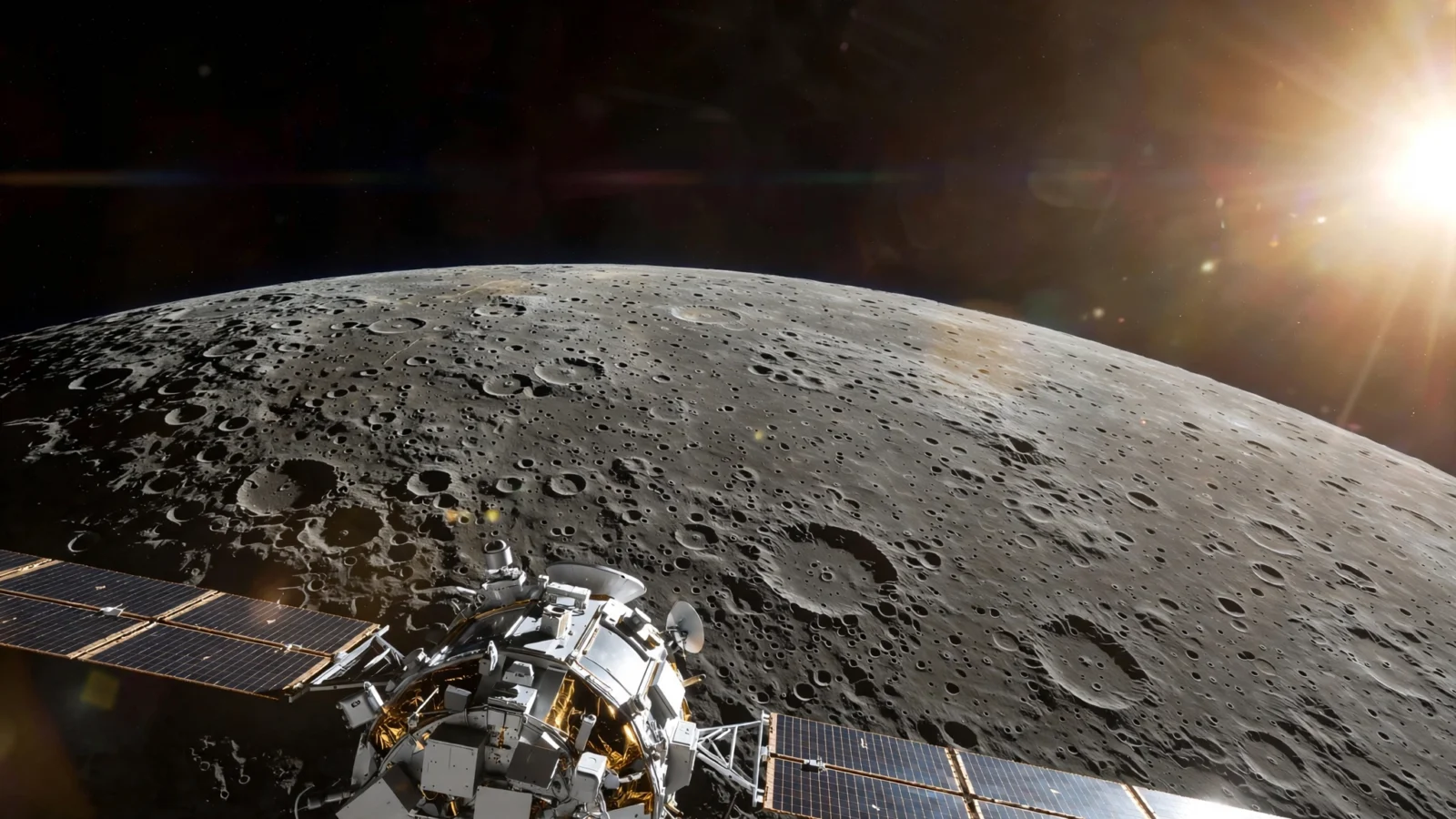
A pair of spacecraft slipped into orbit around Mercury on Saturday, ending an eight-year trip through the inner solar system and putting the European-Japanese BepiColombo mission in place to study the Sun’s closest planet.
The European Space Agency announced the arrival after a series of thruster firings slowed the combined craft enough for Mercury’s weak gravity to catch it. Flight controllers in Germany, about 94 million miles from the planet, needed several hours to confirm from the data streaming back that the spacecraft had reached orbit, according to the Associated Press.

BepiColombo is only the second mission to orbit Mercury, after NASA’s MESSENGER, which circled the planet from 2011 to 2015. It is the third mission to visit Mercury at all: NASA’s Mariner 10 flew past the planet in 1973. The mission cost about $2 billion, or 1.7 billion euros, according to the Associated Press.
Two orbiters, two jobs
The mission carries two orbiters that will work as a pair. The European Space Agency built the Mercury Planetary Orbiter, which will map the planet’s cratered surface, measure its composition and temperature, chart its topography and gravity field, and determine the size of its core. The Japan Aerospace Exploration Agency built the Mercury Magnetospheric Orbiter, called Mio, which will study Mercury’s magnetic field and the plasma around the planet. Scientists still do not understand what sustains the field or why it sits off-center from the planet.

For now the two orbiters remain joined together. They will separate on Dec. 9-10 and move into their own polar orbits, and science work is set to begin in April 2027. The main mission is planned to last a year, with an extension through 2029 possible.
“Mercury is a challenging destination,” Santa Martinez, the European Space Agency’s mission manager for BepiColombo, said at a press event in August. “What makes this mission really unique is that for the first time in space exploration, we are bringing two spacecraft to the vicinity of the planet, and we are going to put them in orbit around this mysterious body.”
Lead project scientist Geraint Jones said the paired orbiters will give researchers “unprecedented measurements taken by two spacecraft at the planet at the same time.”
A hard trip to a hard place
BepiColombo launched on Oct. 20, 2018, and reached Mercury by shedding speed through nine flybys of Earth, Venus and Mercury. The hard part was not getting closer to the Sun but losing enough energy to match Mercury’s path around it, an operations editor at the European Space Operations Centre said in September. “Reaching Mercury is actually harder than reaching Pluto,” Azul Pinochet-Barros said.
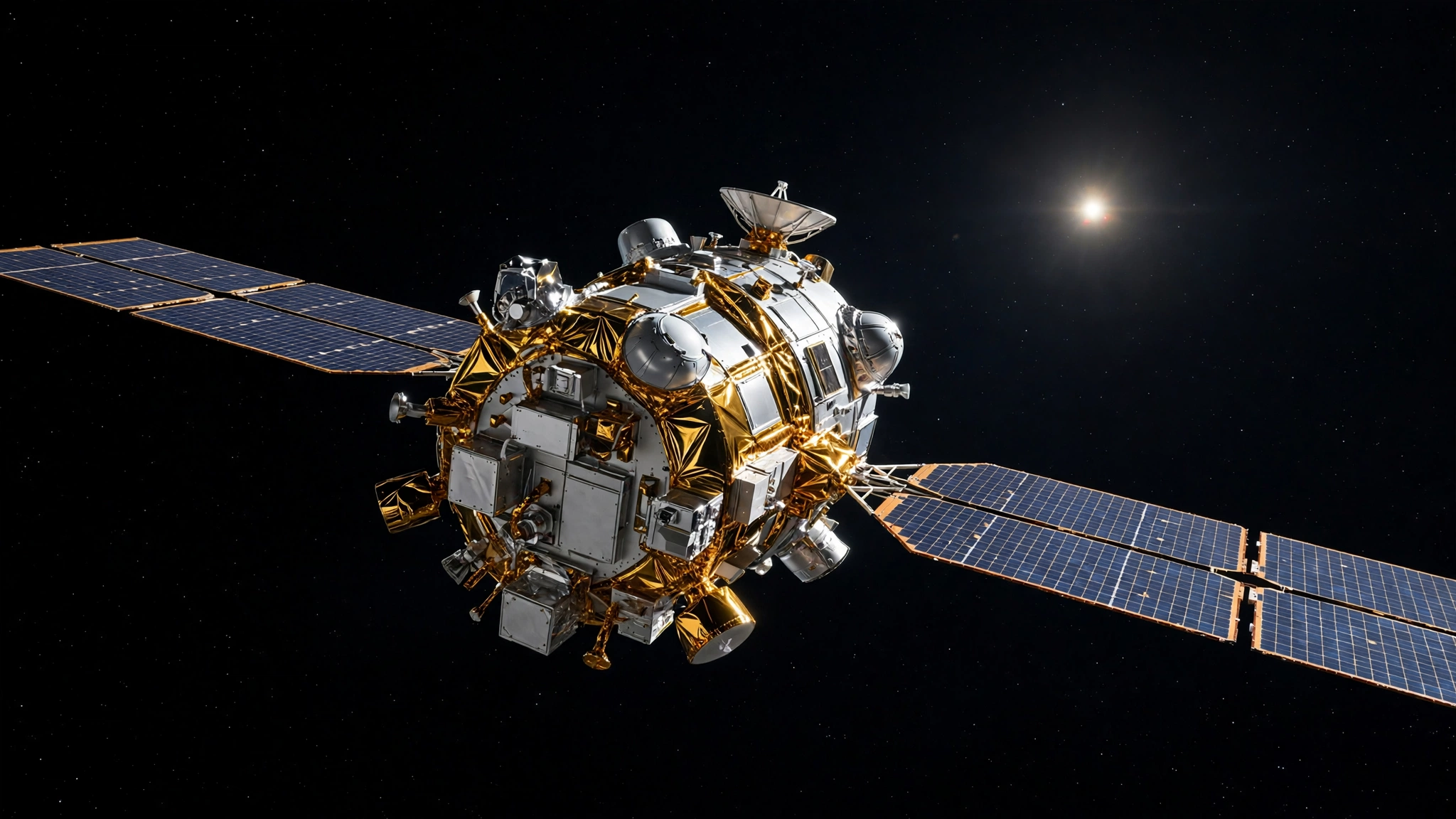
The trip ran longer than planned. A glitch in the mission’s thrusters in 2024 kept them from running at full power, which forced a change in course and pushed the arrival from December 2025 to November 2026. The propulsion unit that carried the two orbiters, the Mercury Transfer Module, separated from them on Sept. 3, 2026, for the final leg of the trip.
The two orbiters entered an elliptical orbit after approaching the planet’s night side, and a series of burns over the coming weeks will lower the orbit before the two craft go their separate ways in December.
Reporting based on coverage by Eos, Nature and the Associated Press.