Fed Governor Waller Says a 50-Basis-Point December Rate Hike May Be Needed to Cool Inflation
Christopher Waller told CNBC the Federal Reserve may need a half-point increase in December, or a clear signal of another rise in January, after three straight months of core prices rising 0.3%.
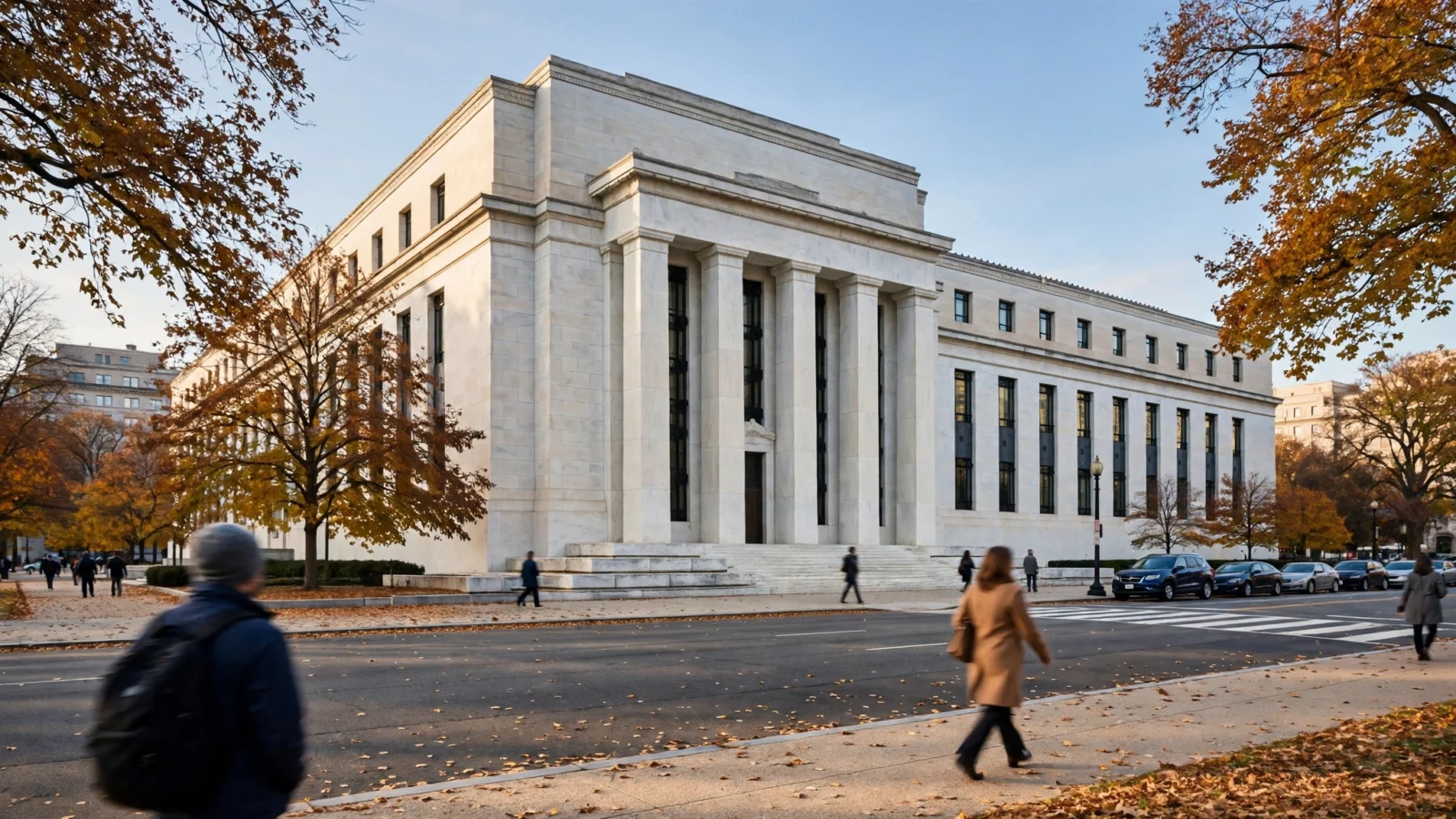
Federal Reserve Governor Christopher Waller said Wednesday that the central bank may need to raise interest rates by a half percentage point in December, saying smaller moves would not do.
In a CNBC interview, Waller said the Fed first needs to “take back” the three insurance cuts from last year, which would return the benchmark rate to 4% to 4.25%. “So we may have to go above three, you know, three hikes plus maybe some more, to get it to start actually coming back down,” he said.
Waller pointed to three straight months of core consumer prices rising 0.3%, a pace equal to about 3.5% a year. He said in a Nov. 10 speech that such a reading would justify considering a half-point move, and the October reading met that mark.
A half point now, or two quarter points
Waller said he could accept quarter-point increases in December and January, but only if the Fed tells markets the January increase is coming. “If you’re not going to signal this very clearly to markets that you’re going [to raise rates] in January, my view is then you have to go 50 in December to put it in place and get it done,” he said.

The Fed raised its benchmark rate a quarter point to 3.75% to 4%, and held it steady at its October meeting by a 10-2 vote. Its next meeting is Dec. 8-9. The rate path sets what households pay to borrow; US News America explains how fixed-rate and variable-rate loans differ.
Waller said he was worried businesses were getting used to inflation near 3%, well above the Fed’s 2% target. “People are starting to think 3% [inflation] may be the norm,” he said. “That’s the kind of psychology I think we need to start breaking.”
Reporting based on coverage by MarketWatch and CNBC.