Kagan and Soai Win 2026 Nobel Chemistry Prize for Solving Mirror-Molecule Mystery
Henri Kagan and Kenso Soai won the 2026 Nobel Prize in Chemistry for showing how chemists can produce a single mirror-image form of molecules, the Royal Swedish Academy of Sciences said Wednesday, resolving a puzzle central to how medicines are made.
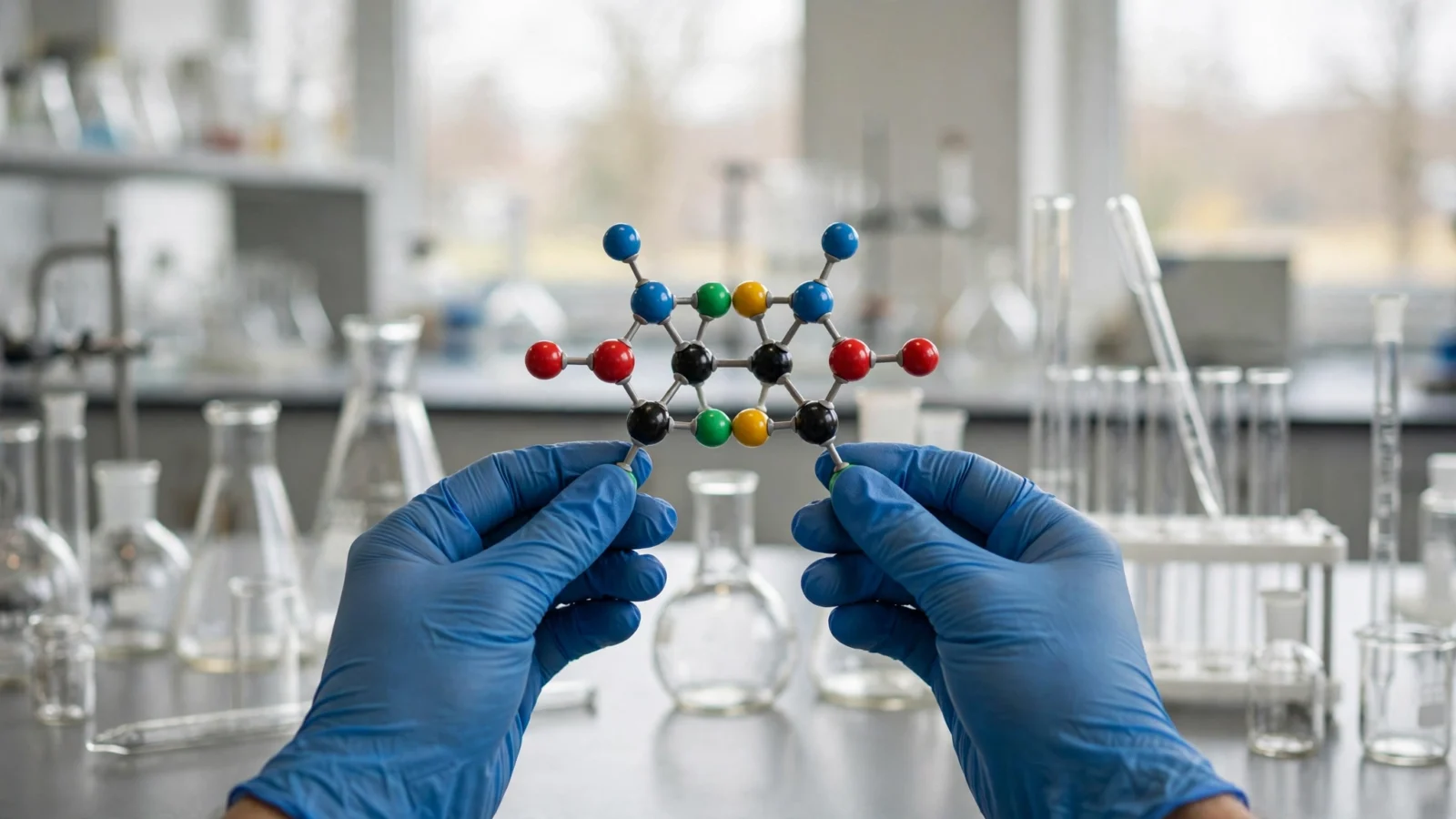
STOCKHOLM — Henri B. Kagan of France and Kenso Soai of Japan won the 2026 Nobel Prize in Chemistry on Wednesday for work that showed how laboratory reactions can be steered to produce just one of two mirror-image versions of a molecule, the Royal Swedish Academy of Sciences announced.
The Academy cited the pair, according to Reuters, “for the discovery of non-linear effects and autocatalysis in asymmetric organic synthesis.” The two will share the 12 million Swedish kronor prize, about $1.2 million.
Why handedness matters in chemistry
Many molecules that matter to life come in left- and right-handed forms that are mirror images of each other, much like human hands, according to CNN. Living cells consistently use only one of those forms, a one-sided preference known as homochirality. For decades, ordinary laboratory reactions frustrated chemists because they typically yielded an even split of both forms, raising the question of how nature settled on just one.
Kagan, affiliated with Université Paris-Sud in Orsay, found in the early 1980s that carefully chosen catalysts could tilt a reaction to favor an excess of one mirror form over the other, CNN reported. Soai, of the Tokyo University of Science, pushed the idea much further in the following decades, developing a reaction — now known as the Soai reaction — in which a single handed form amplifies itself through autocatalysis until it dominates the products, a result he achieved in the early 2000s.
Nobel Committee for Chemistry chair Heiner Linke said the work answers how homochirality can emerge spontaneously, a mystery more than a century old, according to CNN. The committee said no one other than life itself had previously managed that feat.
From a basic puzzle to drug manufacturing
The practical stakes are largest in pharmaceuticals. Many active drugs are chiral, and the two mirror forms can behave very differently in the body: one may treat disease while the other is inactive or even harmful, Linke noted at the announcement, according to CNN. Being able to choose which form to make is now a routine tool in the design of medicines, and the same control is used for flavors and fragrances.
CNN reported that Soai described the award call as arriving on one of the most exciting days of his life, and that he had been out shopping when the committee reached him. The committee said it had not immediately been able to reach Kagan during the presentation.
Reporting based on coverage by CNN and Reuters.