Voyager 1 to Become First Human-Made Object One Light-Day From Earth on Wednesday
NASA says Voyager 1 will reach one light-day from Earth, about 16 billion miles, at 5:16 a.m. EST on Wednesday, November 18, nearly 50 years after launch. A radio signal sent to the probe will then take a full day to arrive.

Voyager 1 will become the first human-made object to reach one light-day from Earth on Wednesday, November 18, NASA says. No spacecraft has reached that distance before.
The probe will cross the line at 5:16:07 a.m. EST, according to NASA. A light-day is the distance light travels in 24 hours: 16,094,799,096 miles, or 25,902,068,356 kilometers. By that point, Voyager 1 will have spent 49 years, two months and 11 days in flight since its launch in 1977.
Nothing in the universe travels faster than light, NASA notes, which is why astronomers measure deep space in light-distances. The Moon sits 1.3 light-seconds away, sunlight takes about eight minutes and 20 seconds to reach Earth, and Neptune, the most distant planet, is about four light-hours and 10 light-minutes away. A light-year, the distance light covers in a year, is about 5.88 trillion miles.
A day for a signal to arrive
At one light-day, a radio command sent from Earth will take a full 24 hours to reach Voyager 1, and confirmation that it arrived will take another day to come back. Engineers at NASA’s Jet Propulsion Laboratory in California will wait two days for a round trip on every command. Its twin, Voyager 2, took a different path through the solar system and is on pace to reach one light-day in November 2035.

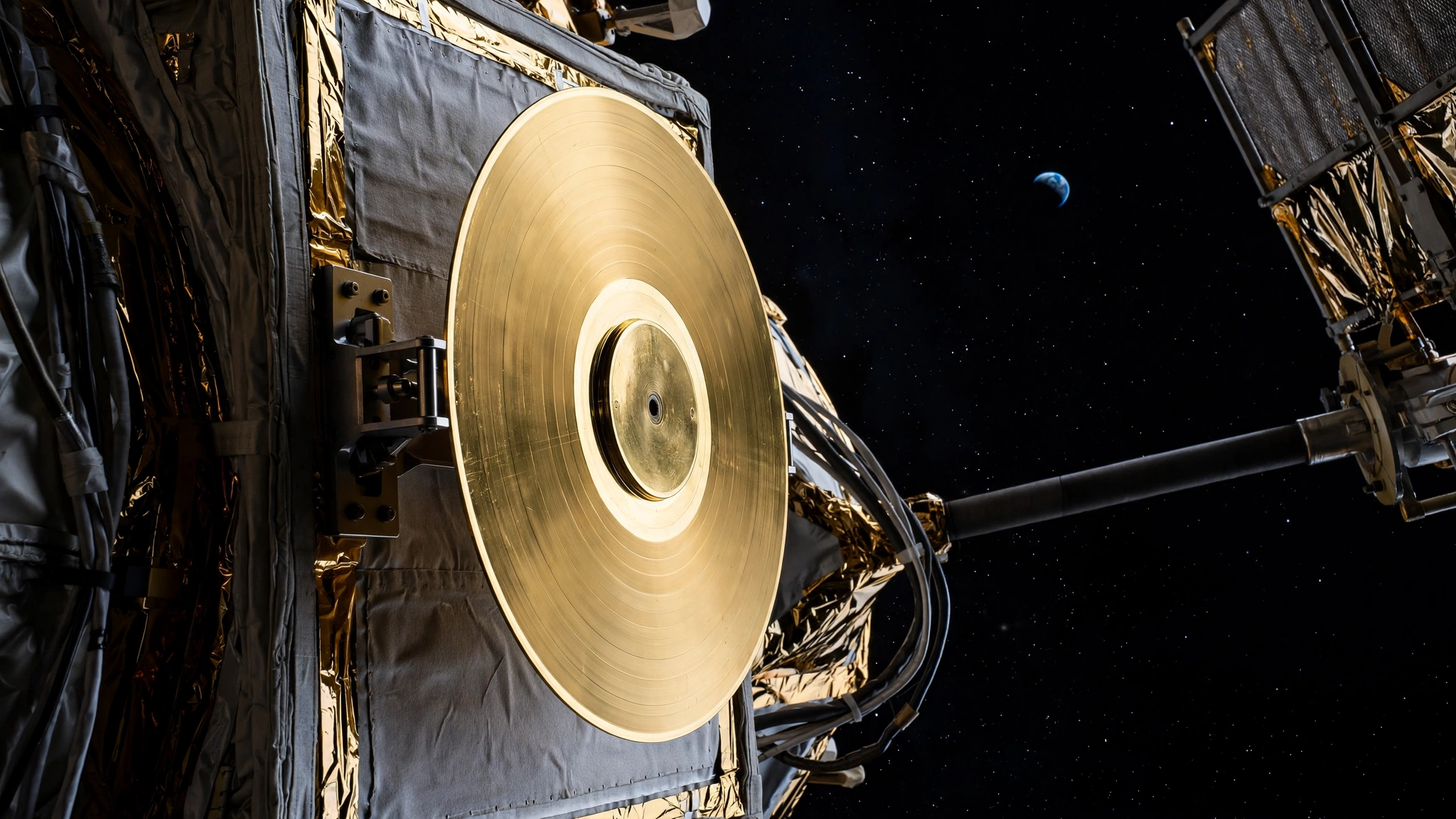
Voyager 1 is now cruising at nearly 38,000 mph through interstellar space, headed toward a star more than 17 light-years away called Gliese 445, also known as AC +79 3888. NASA says the probe is expected to pass within about 1.7 light-years of that star in 40,000 years. NASA describes the crossing as a measure of distance.

How to join the celebration
NASA has invited people around the world to mark the crossing on Tuesday, November 17. After sunset, anyone can flash a message to the spacecraft with a phone, a flashlight or even a building, as part of the agency’s “Shine Bright for Voyager’s Light-Day” event.
Reporting based on coverage by NASA.