Bank of England Raises Rates to 4% in First Hike Since 2023 as Inflation Heads Toward 5%
The Bank of England raised its benchmark rate to 4% in an 8-1 vote, its first increase in more than three years, and warned that another rise is likely if the conflict in the Middle East keeps pushing energy prices up.
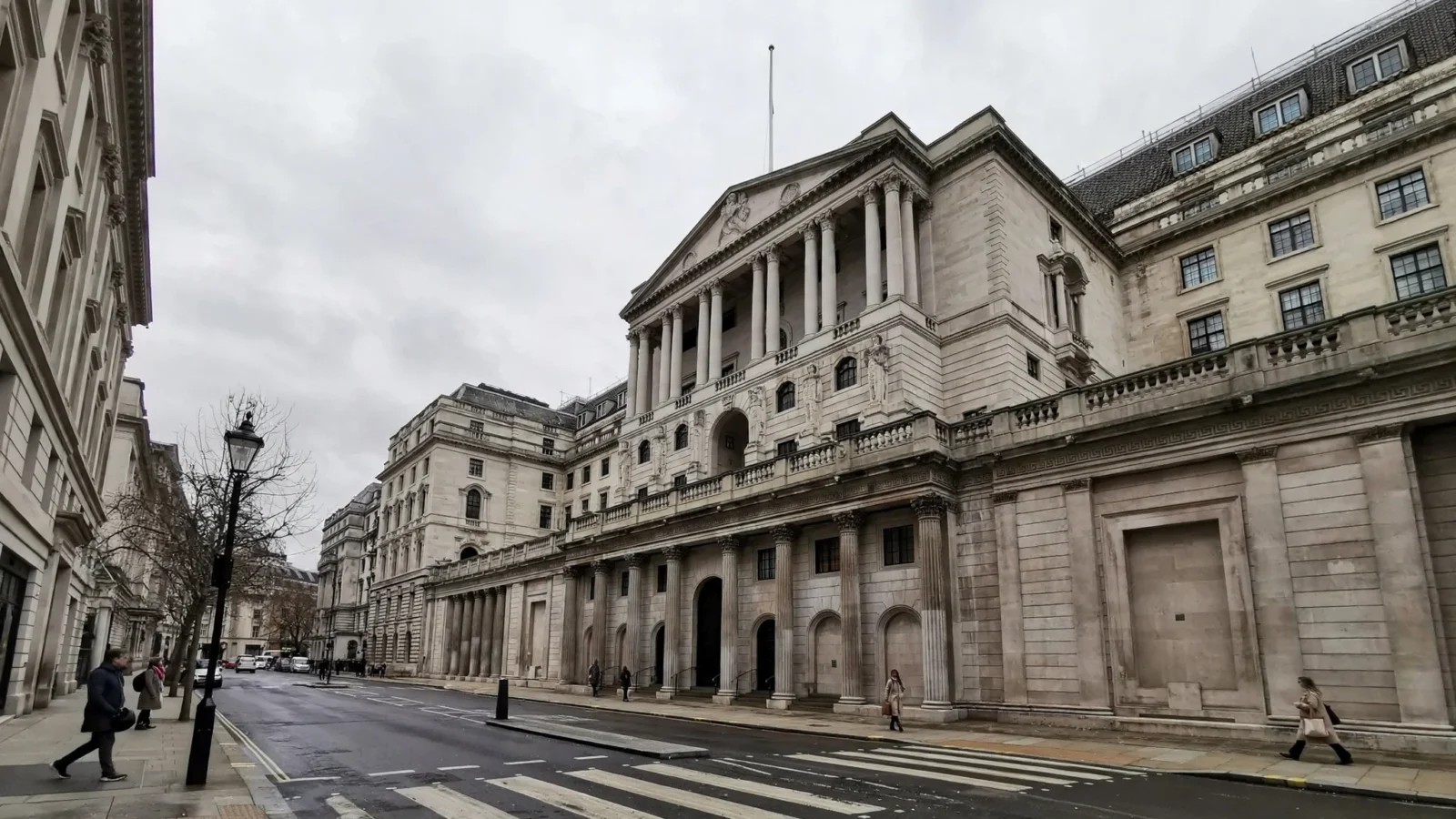
The Bank of England raised interest rates for the first time in more than three years on Thursday, lifting Bank Rate to 4% from 3.75% and warning that at least one more increase is likely if the conflict in the Middle East continues to push energy prices higher.
The Monetary Policy Committee voted 8-1 for the quarter-point rise. Catherine Mann, an external member of the committee, voted for a half-point increase to 4.25%. She said she was concerned about “non-linear inflation risks” after consumer price inflation reached 3.5% in September.
“Today’s increase shouldn’t be seen as the first in an inevitable long sequence of hikes. But unless the conflict in the Middle East is resolved, neither does it seem likely to be the last increase,” Governor Andrew Bailey said.
Inflation seen near 5% next year
The bank now expects inflation to peak at an average of 4.8% in the second quarter of next year, more than double its 2% target, and not to return to 2% until the third quarter of 2028. In a worse case, with oil at about $130 a barrel against about $100 now, inflation would reach 6.2% in the third quarter of 2027.

After inflation and taxes, British households’ income from work was set to fall both this year and next, the bank said.
Growth revised up, more rises possible
The bank raised its growth forecasts to 1.6% this year and 1.3% next, stronger than the government’s Office for Budget Responsibility predicted last week. It pointed to strong official data this year, spending on artificial intelligence and a small, temporary lift from finance minister John Healey’s annual budget last week.
Deputy Governor Clare Lombardelli said a further rate hike was likely to be needed in the near term. Markets had priced in three quarter-point rises for 2027, more than most economists expect. The bank’s next decision is due Dec. 17.

For homeowners, the move matters because higher rates feed through to mortgage costs. Our guide explains how fixed-rate and adjustable-rate mortgages differ.
Reporting based on coverage by Reuters, MoneySavingExpert and Seeking Alpha.