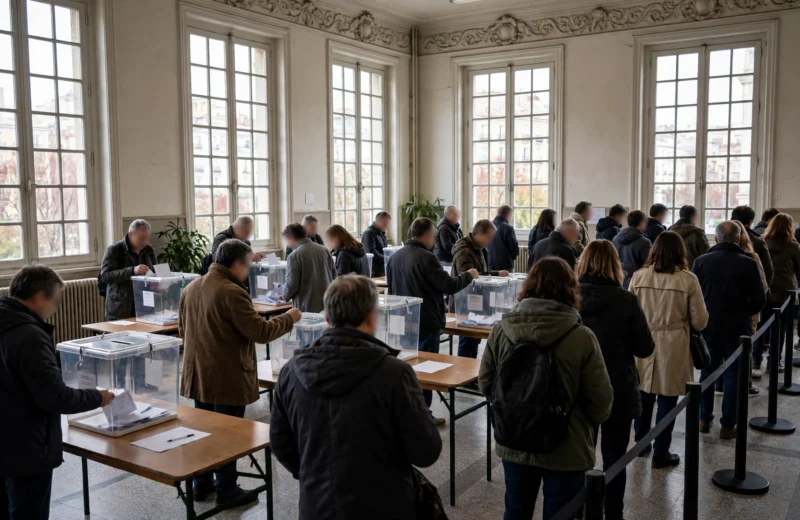
Eisenkot plays down unity government with Netanyahu after two-hour talks in Tel Aviv on Sunday
Gadi Eisenkot played down a unity government with Benjamin Netanyahu after two hours of talks in Tel Aviv on Sunday, after Netanyahu offered to serve second in a rotation. Eisenkot has until December 6 to form a government after the October 27 election left both blocs short of a majority.

Gadi Eisenkot played down the chance of a unity government with Prime Minister Benjamin Netanyahu on Sunday after the two men held two hours of talks in Tel Aviv, according to Reuters.

Netanyahu had offered to serve second in a rotation deal between his Likud party and Eisenkot’s Yashar party, with Eisenkot serving as prime minister first. In a joint statement, the two men said the discussion was businesslike and that both sides sought to bridge the substantial differences between them, according to Reuters.
A source briefed on the meeting told CNN that the talks broke down over significant gaps on substantive issues and that no follow-up meeting was scheduled. The source said Eisenkot told Netanyahu he is committed to the bloc working to oust him, and that Likud could join a government later if it accepts the bloc’s basic principles, including a state commission of inquiry into the failures around October 7, 2023, according to CNN.
Seats and deadline
Israel’s president gave Eisenkot the task of forming a government after the October 27 election. Eisenkot has until December 6 to form a government, with the possibility of a 14-day extension, according to Reuters.

Netanyahu’s Likud and its alliance of far-right and ultra-Orthodox parties won 53 seats in the election. Eisenkot and his potential partners won 48 seats. Both totals fall short of a majority in the 120-seat Knesset, according to Reuters.
Last week Eisenkot signed coalition deals with the left-wing Democrats and the right-wing Yisrael Beiteinu party, according to Reuters. CNN reported that Eisenkot has said he wants to bring a new government to a parliamentary vote as early as next week.

What happens without a deal
If Eisenkot and Netanyahu cannot agree on a unity government, Eisenkot could form a coalition with possible support from ultra-Orthodox Jewish and Arab parties, according to Reuters. Israel’s Channel 12 news reported that there were no plans for further meetings between the two men, and a spokesperson for Eisenkot confirmed that report to Reuters.
Yair Golan, head of the Democrats, said after the meeting on Sunday that the Israeli public was behind Eisenkot, in a post on X cited by Reuters.
Reporting based on coverage by Reuters and CNN.