Fed Minutes Show Nearly All Officials Expect More Rate Hikes, With a Larger December Move Possible
Minutes from the Federal Reserve's October meeting show almost all policymakers expect further rate increases, and two said a larger-than-usual hike could be considered in December if inflation data disappoints.
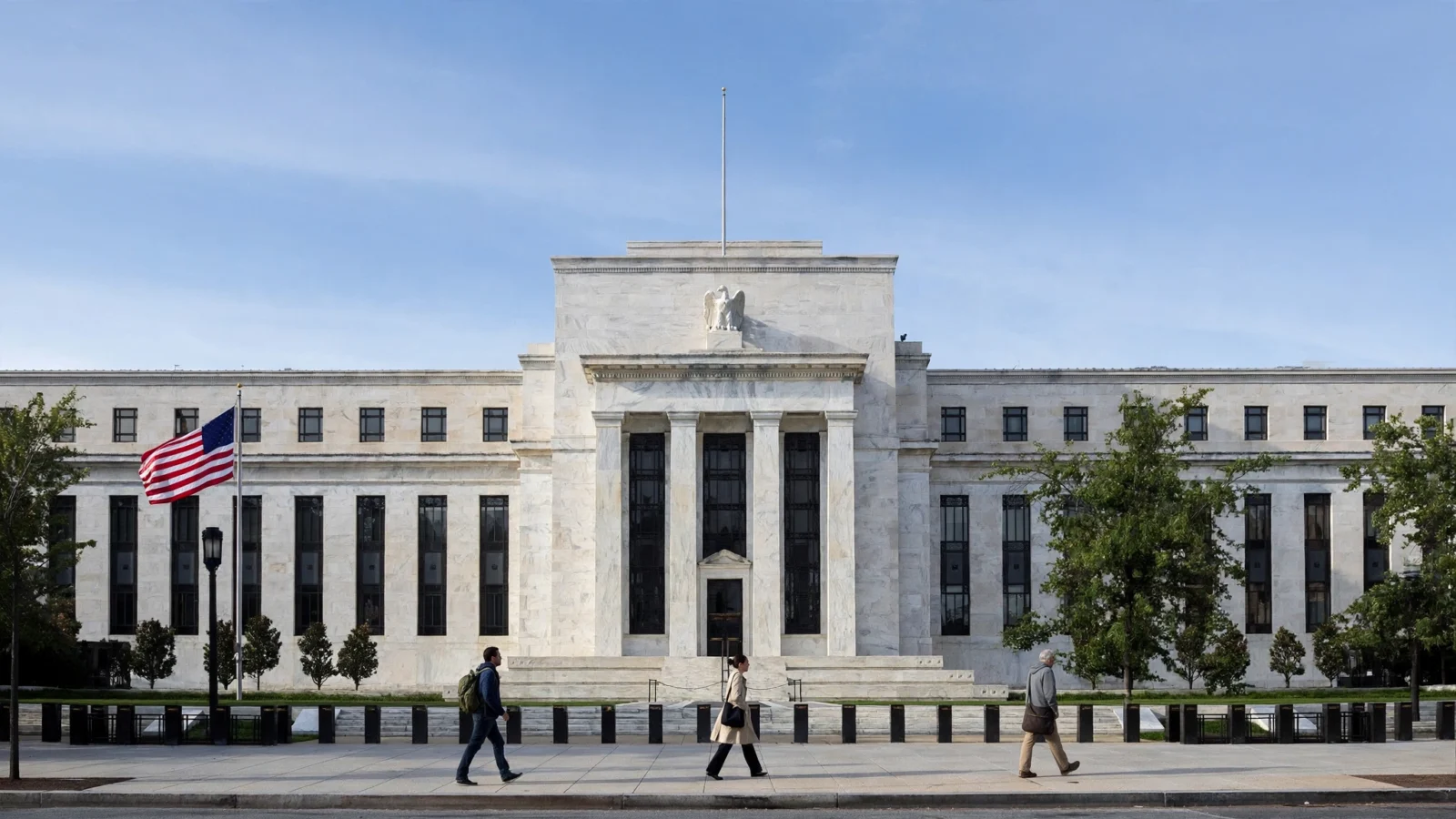
Minutes from the Federal Reserve’s October meeting show that almost all policymakers expect further interest rate increases in the months ahead, and a couple said a larger-than-usual hike could be considered in December if inflation data disappoints.
The record of the Oct. 27-28 meeting of the Federal Open Market Committee was released on Wednesday. At that meeting, policymakers voted 10-2 to keep the benchmark rate at 3.75% to 4.00%. Fed Gov. Lisa Cook and Cleveland Fed President Beth Hammack dissented, favoring a quarter-point increase, while Fed Chair Kevin Warsh joined the majority in holding rates steady.
“In the months ahead, almost all participants judged that, under their baseline outlooks for inflation and the labor market, further action to raise the target range for the federal funds rate would likely be appropriate, in order to ensure a timely return of inflation to the 2% objective,” the minutes said.
The minutes also showed that a couple of participants said an increase of more than 25 basis points “could warrant consideration at the next meeting if incoming inflation data were unfavorable.” Several members said the decision to hold rates in October was a “close call,” and some who wanted an immediate increase said they could have accepted no change if markets clearly understood that further tightening was likely.
A December hike looks all but certain
Markets have treated a December increase as a near certainty. The CME FedWatch tool prices a roughly 95% chance that the committee raises the federal funds rate to a 4.00%-4.25% range at its Dec. 8-9 meeting, followed by a 69% probability of 4.25%-4.50% in January. Bond markets still view a half-point move as unlikely, putting its probability at about 5%.
Federal Reserve Gov. Christopher Waller pressed the case for a larger move in a CNBC interview on Wednesday, the day the minutes were released. He said the central bank may need to raise rates by 50 basis points in December or clearly signal that another increase would follow in January.
“Inflation’s been above our target for over five years, so if you really want to get it down, you have to start taking more aggressive actions,” Waller told CNBC. Waller has already said a half-point increase may be needed to cool inflation, and he told CNBC it may be necessary to “shock people” with a larger rate hike.
St. Louis Fed President Alberto Musalem said this week that “the economy will likely require several interest rate increases before the spring of 2027 to achieve 2% inflation in a timely manner.” Realtor.com chief economist Danielle Hale said the market anticipates two or three hikes over the next six to eight months.
Inflation is still hot, and housing feels it
Inflation remained hot in October. Overall prices rose 0.4% from September, according to consumer price index data released by the U.S. Bureau of Labor Statistics last week. Employers added 165,000 jobs in October after a weak September, pushing the unemployment rate down to 4.1%.
Some committee members said the rapid buildout of artificial intelligence was adding to inflation, though more scrutiny of the industry could slow spending and reduce price pressures. Members also said the effect of tariffs on the economy was fading, while high energy costs continue to pressure Americans. Pending home sales in September dropped to their lowest level on record, according to Realtor.com.

The committee’s next meeting is scheduled for Dec. 8-9, and its decision will turn on the data officials have in hand. The November consumer price report is not due until Dec. 10, the day after the meeting ends, leaving the October figures as the final inflation reading before the vote.
Reporting based on coverage by Realtor.com.