Keisha Lance Bottoms Wins Georgia Governor’s Race, and a Redistricting Fight May Come First
Democrat Keisha Lance Bottoms won Georgia's governor's race with 54.31% of the vote, becoming the first Black woman elected governor of a U.S. state. Before she takes office in January, Georgia Republicans may try to redraw congressional maps in a special session signed by outgoing Gov. Brian Kemp.
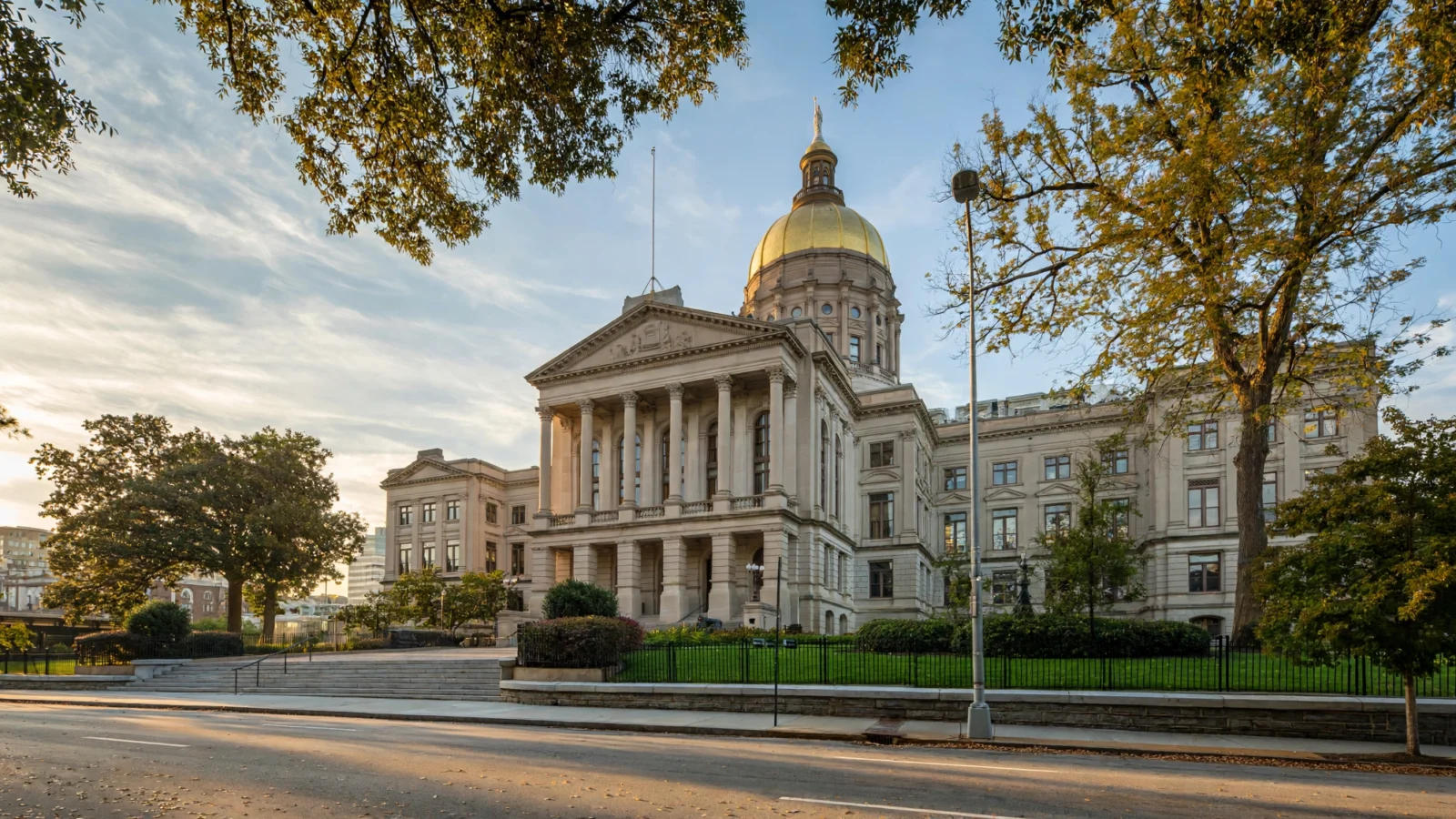
Keisha Lance Bottoms will be the next governor of Georgia, winning Tuesday’s election to become the first Black woman elected governor of a U.S. state, the first Black governor of Georgia and the first woman to hold the office.
The Democrat defeated Republican businessman Rick Jackson, who entered Election Day in a statistical tie with her in polling, according to USA Today. As of Wednesday morning, Bottoms had 54.31% of the vote, more than 360,000 votes ahead of Jackson. Associated Press figures put her total at 2,271,388 votes with 99.96% of precincts reporting.
Bottoms, 56, is a former mayor of Atlanta who also served as a senior adviser to former President Joe Biden. She succeeds Republican Gov. Brian Kemp, who is leaving office after two consecutive terms. Republicans had controlled the governor’s office for more than two decades, according to Reuters.
A redistricting fight before January
Before Bottoms takes the oath of office in January, Georgia may face a fight over its congressional maps. State legislators called a special session in June to consider redrawing the maps after a Supreme Court decision in a Louisiana case weakened protections in the Voting Rights Act. After pushback from Democratic lawmakers and voting rights groups, including protests at the state capitol, Republicans in the state House set the effort aside for the time being.
“Changes to Georgia’s maps should take place only when members of the General Assembly and citizens have been given ample opportunity to gather the facts, provide input, and engage in meaningful discussion,” Georgia state House Speaker Jon Burns wrote in a letter to Kemp. “For this reason, we will not be taking up congressional or legislative redistricting for the 2028 election cycle during this special session.”
Now, with a Democrat set to take the state’s top office and Democrats on track to take majority control of the Georgia House, redistricting is likely to return to the table, with any new maps pushed through the legislature and signed by Kemp before he departs, USA Today reported. Andra Gillespie, a political scientist at Emory University in Atlanta, told USA Today before election night: “I would not be surprised if there is a special redistricting session. I think if (Bottoms) wins, there will absolutely be a special session that they’ll try to get done while Brian Kemp is still in office.”
Where the lines could move
Gillespie said the scope for change in Georgia is limited, because the Atlanta metro area is too large and too Democratic to be split up easily. The most likely seat to be lost in a redistricting effort is the one held by U.S. Rep. Sanford Bishop in Georgia’s southwest corner, one of the last Black-majority congressional districts in the South held by a Black lawmaker. Bishop won reelection in District 2 with 60.87% of the vote on election night. Republicans could also target the 13th congressional district in Atlanta, where Democrat Jasmine Clark won with 79.83% of the vote on Tuesday night.

Gillespie also said results from other states could give Georgia lawmakers pause. If redistricting efforts in places such as Texas and Florida backfire in congressional results, she said, Georgia Republicans may decide to wait until 2031 to redraw the maps. On the same election night, Stacey Plaskett was elected governor of the U.S. Virgin Islands, becoming the first Black woman elected governor of a U.S. jurisdiction, according to Reuters.
Reporting based on coverage by USA Today and Reuters.