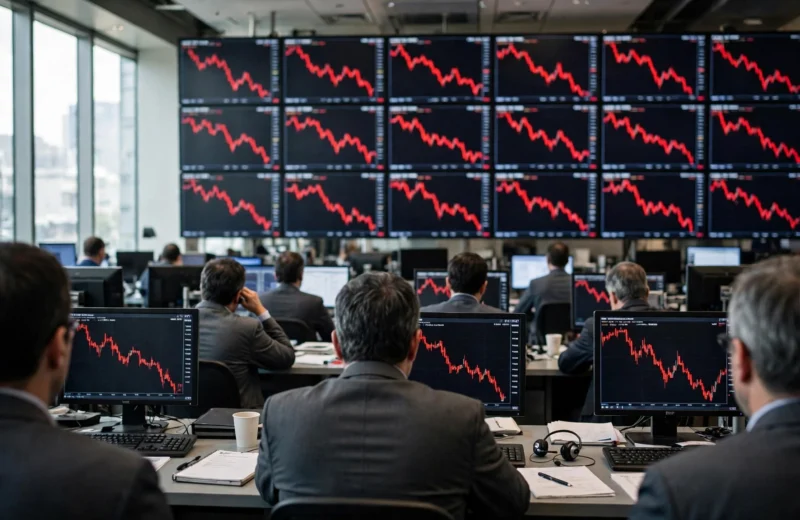
Nasdaq Wipes Out Its 2026 Gains as S&P 500 Falls for a Seventh Straight Day
The Nasdaq Composite fell 5.28% on Friday and the S&P 500 dropped 3.7%, its seventh straight loss, as a sell-off in artificial intelligence stocks pushed both indexes into correction territory.
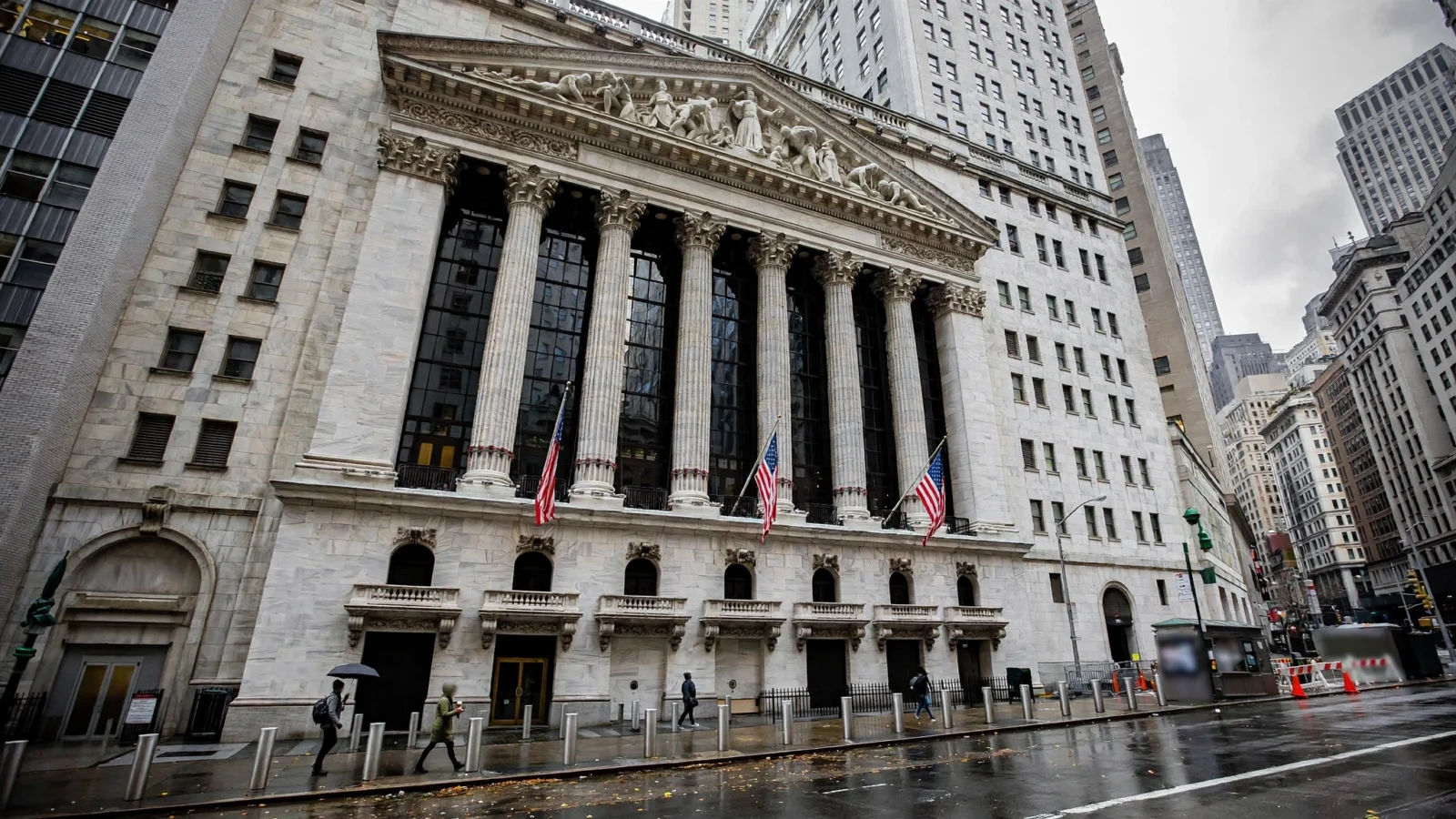
U.S. stocks fell sharply on Friday and closed out a week of heavy losses as investors kept pulling money out of the technology stocks that had led the market higher for most of the year.
The Nasdaq Composite dropped 5.28% on Friday. The drop wiped out the index’s gains for the year. The index hit a record high on October 6 and was up as much as 18.7% for the year; since that peak it has shed roughly $8.7 trillion in market value, according to CNN.
The S&P 500 fell 3.7%, its seventh consecutive day of losses and its longest losing streak since February 2020. The Dow Jones Industrial Average fell 950 points, or 1.93%, its fifth straight day of losses of more than 1%. The Dow dropped 8% for the week, its worst week since March 2020.
Both the Dow and the S&P 500 closed in correction on Friday. Each index ended the day more than 10% below its recent peak. The Nasdaq closed in correction earlier this month and is now down 18% from its October 6 record high. The Nasdaq and the S&P 500 had their worst week since early April 2025, when President Donald Trump’s tariff plans shook global markets.
Nvidia leads the slide
Nvidia fell 14% on Friday, its worst day in almost two years, and tumbled 22.9% for the week, its worst week since October 2008. Reuters reported Friday that the U.S. Securities and Exchange Commission is probing Nvidia over its accounting practices. The chipmaker has now fallen 47.5% since its October 6 peak. The slide has wiped $2.7 trillion off its market value.
Anthropic, the maker of the Claude chatbot, gave back 8.5% on Friday. The shares ended the day at $88.91, just above the $83 price set in the company’s initial public offering. CoreWeave, a cloud provider backed by Nvidia, fell 12% on Friday to $39.51, below its March 2025 offering price of $40.
Investors are weighing a set of worries: how newly elected Democratic governors will affect the pace of the data center buildout, the future of Nvidia’s role in powering growth in artificial intelligence after chief executive Jensen Huang resigned, and whether the hundreds of billions of dollars companies are spending on artificial intelligence will produce returns. “There is a real exodus out of tech stocks,” Steve Sosnick, chief strategist at the online brokerage Interactive Brokers, told CNN. “Buy the dip has taken a back seat to sell the rally, or just sell.”
Investors move toward safety
The sell-off pushed investors toward safer holdings. U.S. Treasury bonds rallied sharply on Friday, and defensive parts of the stock market, such as consumer staples and health care, advanced. The VIX, which tracks expectations for volatility, surged 86% for the week and closed at 35.89 on Friday, its highest level in 19 months.
Some strategists said the selling had gone too far. Valuations for U.S. technology stocks, measured by the forward price-to-earnings ratio of the S&P 500 information technology sector, entered Friday at their lowest level since March 2020, according to FactSet. Nvidia’s forward price-to-earnings ratio for the next 12 months is the lowest since 2002.
“I don’t fully understand it, as the fundamentals don’t really justify all this selling,” Arun Sundaram, senior vice president of investment strategy at CFRA Research, told CNN. “But right now, it’s sell now and worry about the fundamentals later.” David Kelly, chief global strategist at JPMorgan Asset Management, said corrections are “inevitable” and that this one looks mild so far: “This is not a fatal illness. It’s not even the flu. At the moment, it looks like a mild cold, and it should be over in a week or two.”

Reporting based on coverage by CNN.