Tanzania Opposition Leader Tundu Lissu Cleared of Treason but Sentenced to Four Years for Incitement
A three-judge panel in Dar es Salaam acquitted Tundu Lissu of treason, a charge that carried the death penalty, but convicted him of incitement and sentenced him to four years in prison. His party says it will appeal.

DAR ES SALAAM, Tanzania — A Tanzanian court on Friday acquitted opposition leader Tundu Lissu of treason but found him guilty of incitement and sentenced him to four years in prison, in a case rights groups and his supporters say was brought to silence a government critic.

The three-judge panel of the High Court in Dar es Salaam, led by Justice Dunstan Ndunguru, ruled that prosecutors had not proved the intent needed to sustain the treason charge, which carried the death penalty. The judges convicted Lissu of incitement under Section 390 of the Penal Code, a lesser offence the court could reach under Section 319 of the Criminal Procedure Act.
Lissu, 58, chairs CHADEMA, Tanzania’s main opposition party. He was arrested on April 9, 2025, after addressing a political rally in Mbinga, in the southwest of the country, and charged the next day with treason over social media posts he made on April 3 calling on Tanzanians to boycott the October 2025 general election. Prosecutors said a speech he gave told supporters the opposition would “block the election” and “mobilise rebellion.” Lissu pleaded not guilty and said during the trial that his speech broke no law and that the charges were brought for political reasons.
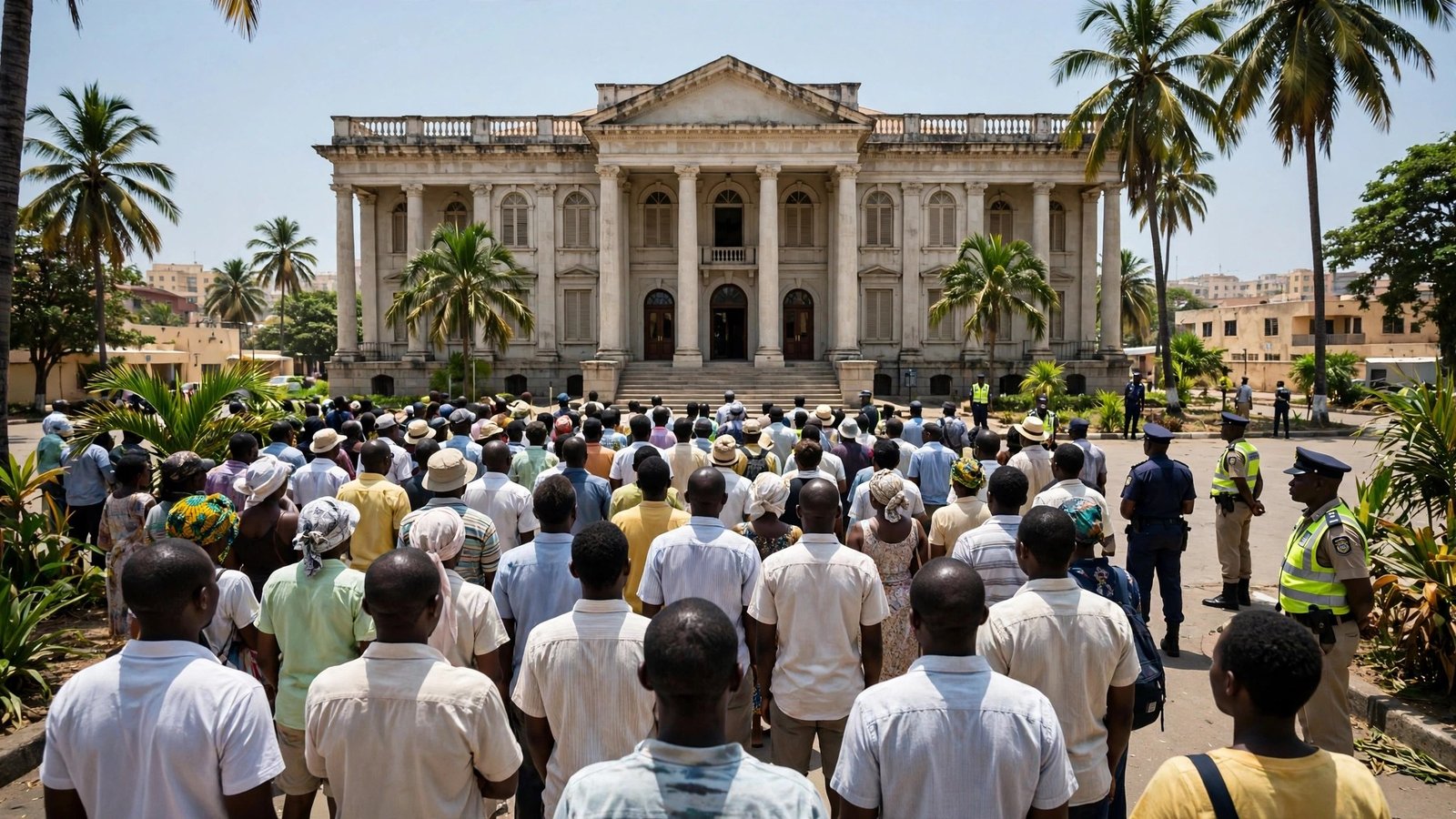
The court ruled that his campaign slogan, “No Reforms, No Election,” was enough to support the incitement conviction. Police surrounded the courtroom on Friday and crowds gathered nearby as Lissu was brought to the hearing in a heavily guarded convoy. Footage posted on CHADEMA’s X account showed him waving his fist and shouting “Do not fear!” in Swahili as guards led him in.
Rights groups call the trial flawed
Amnesty International said the verdict was the end of a trial that was unfair from the start. “Tundu Lissu should never have been arrested, let alone prosecuted and convicted,” said Tigere Chagutah, Amnesty International’s regional director for East and Southern Africa. “Today’s verdict and four-year prison sentence are the culmination of a deeply flawed process that was unjust from the moment of his arrest.” Amnesty said Lissu had spent 577 days in detention, had been denied private access to his lawyers and was forced to represent himself, and that live broadcasts of the proceedings were cut off while at least two international trial observers were arrested, allegedly tortured and deported.
CHADEMA said it would appeal the conviction and seek bail for Lissu while the appeal runs its course, the party’s spokesperson, Brenda Rupia, told Reuters.
Unrest followed the 2025 election
The case fed into the worst political unrest in Tanzania’s history during the October 2025 elections. Lissu’s arrest, CHADEMA’s disqualification from the vote and reports by rights groups that government critics were abducted helped set off protests in which hundreds of people died as police opened fire in several cities. A commission appointed by President Samia Suluhu Hassan said in April that at least 518 people were killed in the violence, which it blamed on the protesters. Hassan was declared the winner of the election with nearly 98 percent of the vote.
Lissu survived being shot 16 times in a failed assassination attempt in 2017. No one has been charged in that case. He went into exile, returned briefly in 2020 to run for president against John Magufuli and finished second, then returned for good in 2023 after Hassan eased the political repression that had grown under Magufuli, who died in office in 2021. Hassan later faced growing criticism from human rights activists for cracking down on opponents, criticism she denied.

The United States has been watching the case closely. The U.S. ambassador to Tanzania, William Trachman, wrote on X on Thursday that he was following the trial and its “broader implications for the rule of law.” The U.S. government said last December that it was reviewing its relationship with Tanzania because of violence against civilians and other concerns.
Reporting based on coverage by Reuters and Amnesty International.