Oleshky Evacuees Reach Ukraine-Controlled Territory After Long Journey Through Russia and Belarus
Hundreds of civilians evacuated from Russian-occupied Oleshky arrived in Ukraine-controlled territory on Saturday afternoon, after traveling by bus and plane through Crimea, Russia and Belarus under a local ceasefire that runs through Sunday evening.
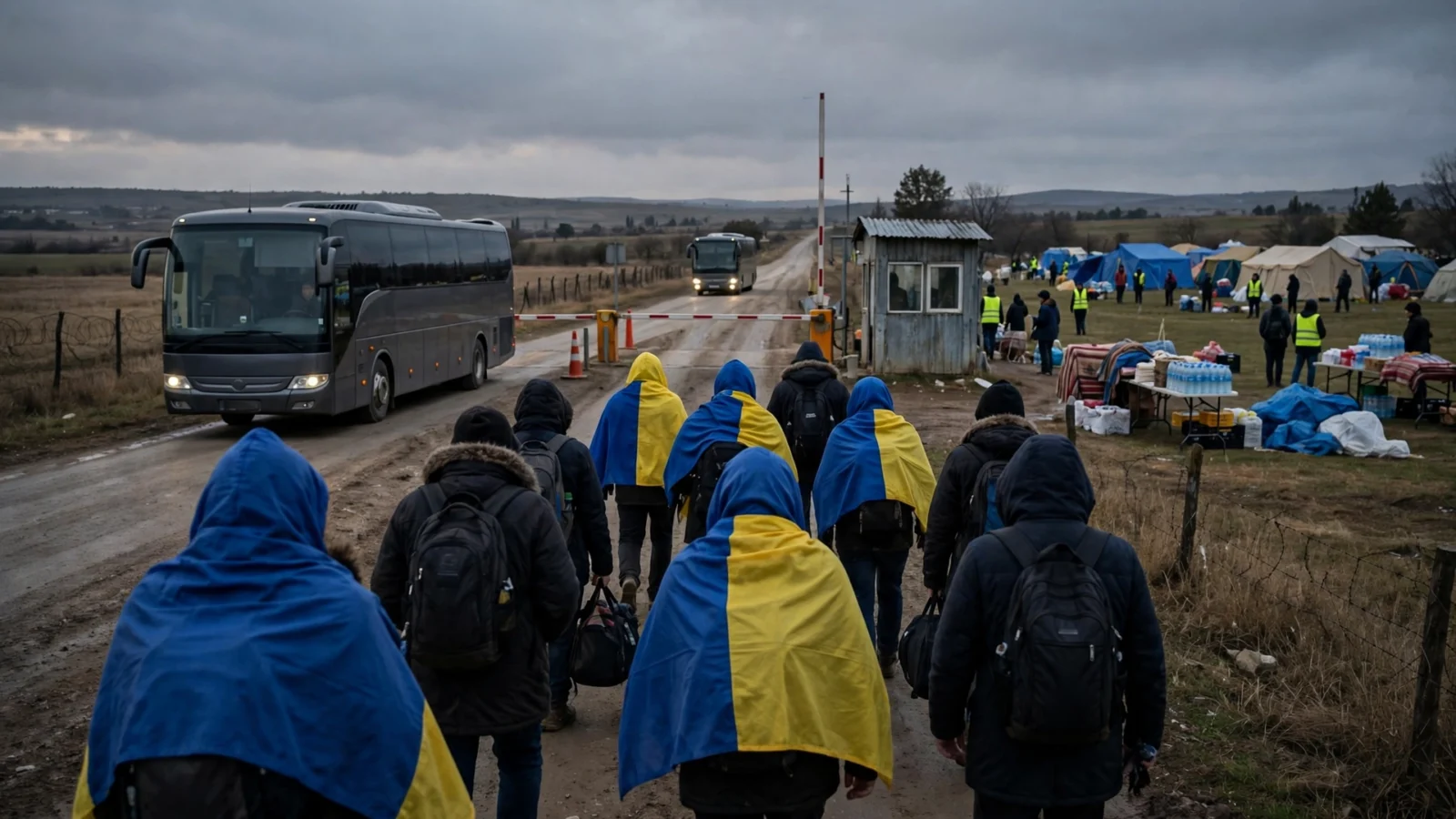
Hundreds of civilians evacuated from the Russian-occupied town of Oleshky arrived in Ukraine-controlled territory on Saturday afternoon, finishing a journey that took them by bus and plane through Crimea, Russia and Belarus under a local ceasefire in southern Ukraine.
The evacuees stepped off buses at the Ukraine-Belarus border wrapped in blue and yellow Ukrainian flags, where relatives waited with aid tents, coffee stands and food for pets, according to CNN and the Associated Press. Ukraine’s President Volodymyr Zelensky announced the arrival on Telegram and thanked first lady Melania Trump for her help with the mediation.
A route through Crimea, Russia and Belarus
The ceasefire in the Kherson region, which the White House says was brokered with help from Trump, began at 3 a.m. Tuesday and is expected to continue through Sunday evening, the Associated Press reported. CNN reported that Pope Leo XIV called for the ceasefire and that Trump helped to negotiate it.
Direct travel west across the Dnipro River into Ukraine-controlled territory was not possible, CNN reported, because access routes to Oleshky were heavily mined. After a two-day demining operation ended Thursday, people who wanted to leave gathered Friday and traveled by bus through occupied Crimea to Anapa in Russia’s Krasnodar region. They then flew from Anapa to Gomel, Belarus, according to the Russian Defense Ministry and Ukrainian officials, and traveled by bus into Ukraine.
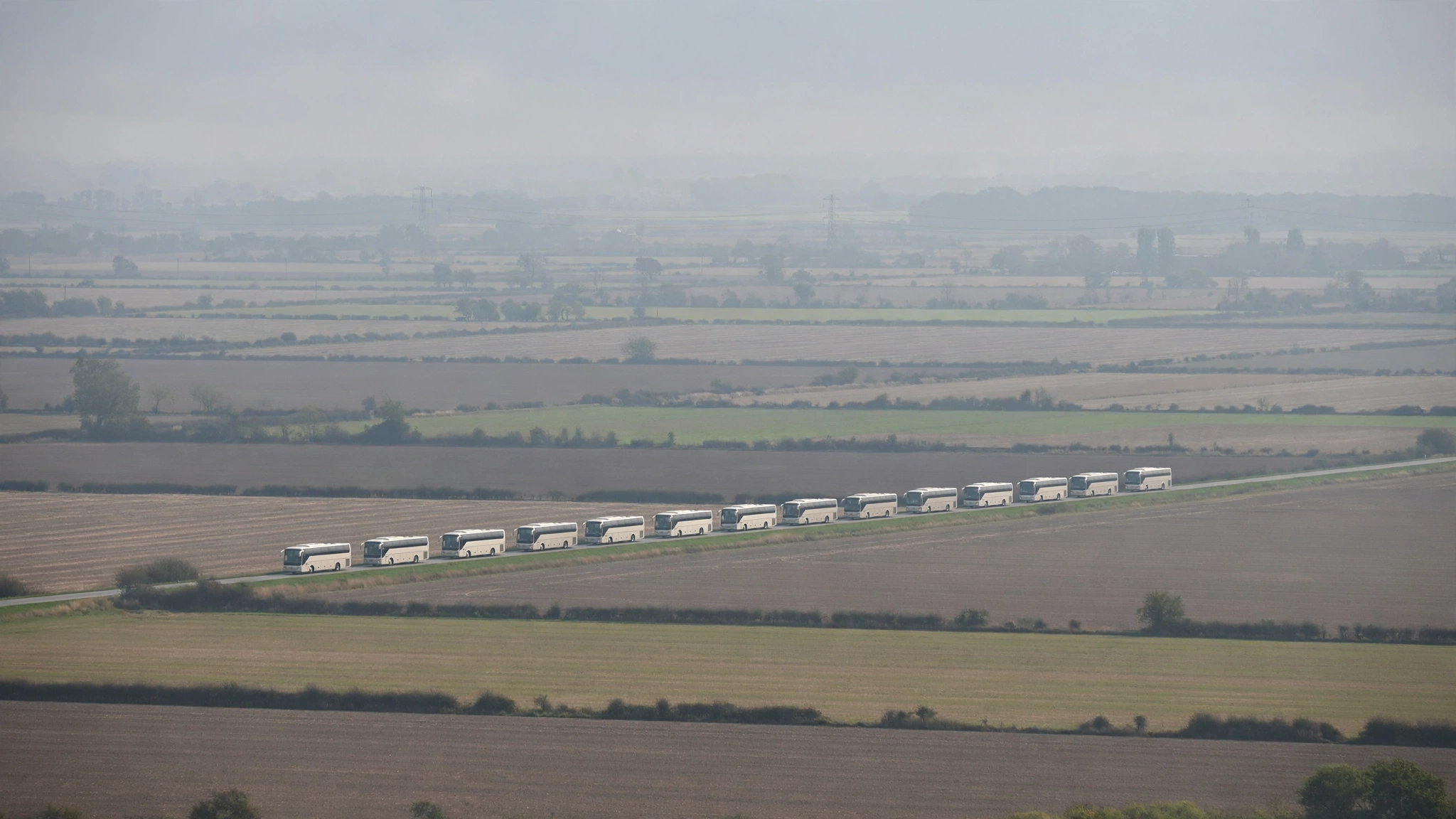
Ukraine’s human rights commissioner, Dmytro Lubinets, traveled to Oleshky to escort the evacuees, CNN reported, becoming the first senior Ukrainian official to openly travel to occupied areas under Russian control and to Russia since the war began.
Russia and Ukraine have not said how many people chose to leave. The Associated Press reported that about 2,000 people were believed to remain in the town when the truce began, and that Trump said on social media Friday that the convoy could safely evacuate more than 750 people. Some residents chose to stay in Oleshky, and others chose to travel to Russian-held territory, according to the Associated Press.
Families separated for years
For some evacuees, Saturday ended separations that had lasted for years. Dmytro, a Ukrainian soldier whose last name CNN did not publish for security reasons, had not seen his wife Larisa for 1,711 days. The couple reunited at the border on Saturday afternoon, both wrapped in Ukrainian flags.
Larisa told CNN she had lost a third of her body weight during the occupation and spoke about others still in the town. “It is very hard. It is not just us who are struggling, it is hard for everyone in the country,” she said. “We are waiting for all this to end, for peace to come, and for victory.”
Another evacuee, Tamara, told CNN she had been reluctant to leave because of her animals, but her health had worsened and she had no access to medicine. “I am sick. And there was no medicine,” she said. “As for food lately, we have not seen any meat, we have not seen any vegetables or fruit, they have not been delivered to us.”
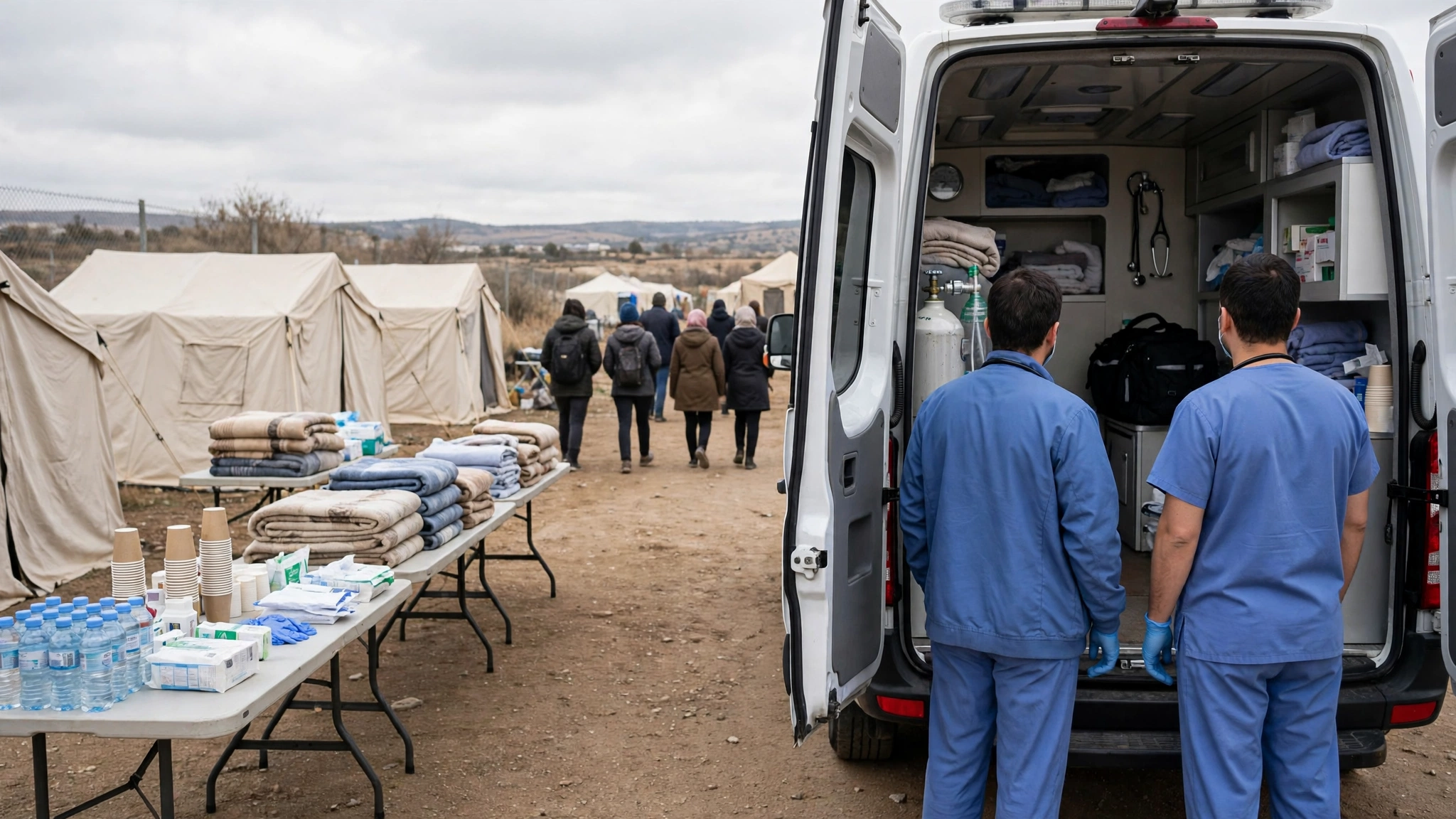
Medical teams waited at the border to treat the arrivals. Andriy Zhydenko, director of the Chernihiv Regional Hospital, told CNN that prolonged malnutrition would be a main concern, because people who have starved for so long must be fed carefully. “There are people with injuries, stroke survivors, and those with limited mobility,” he said.
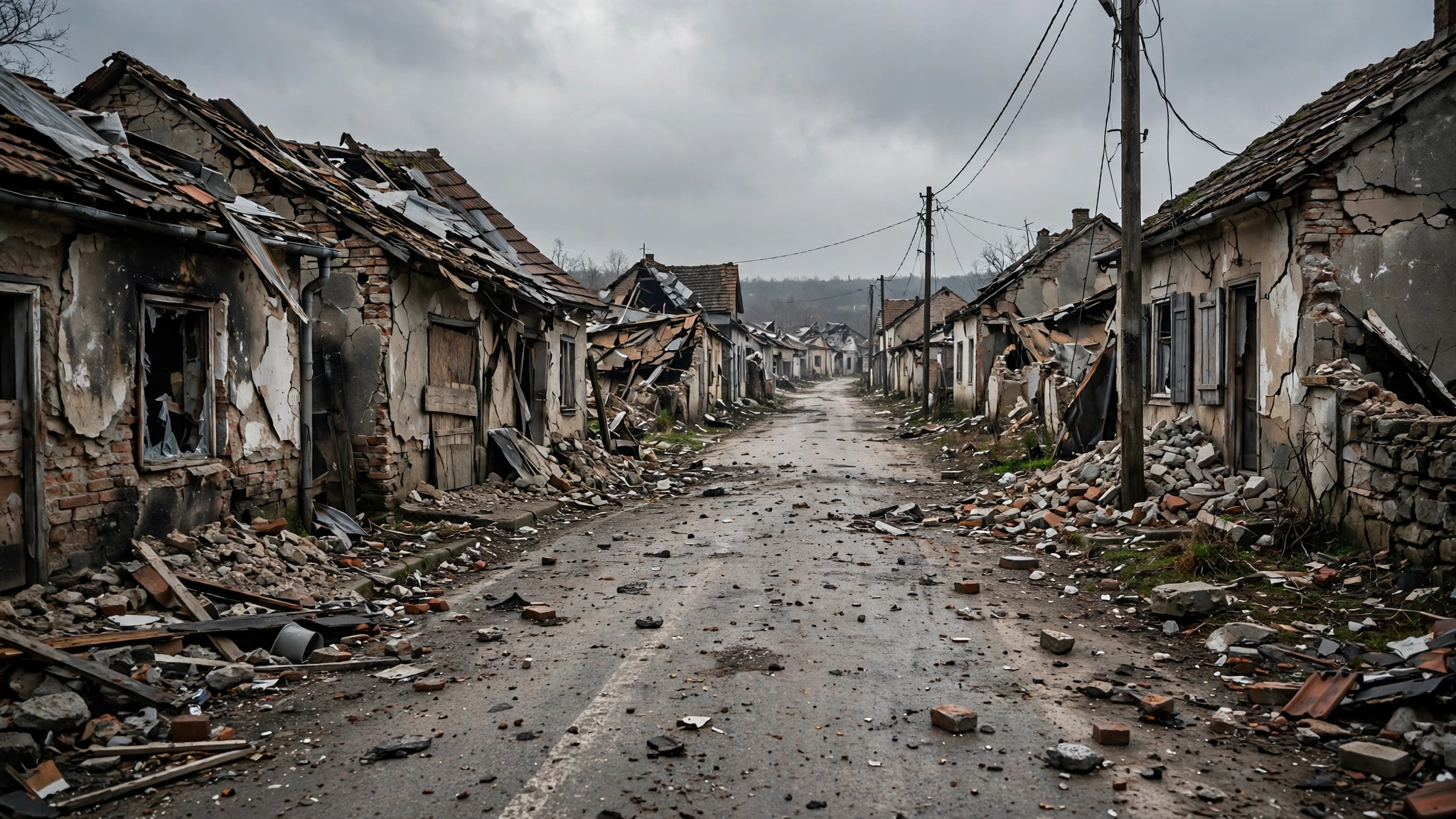
Oleshky had a prewar population of about 24,000, according to the Institute for the Study of War, a United States-based conflict observer. About 40 percent of that population fled to Ukraine-controlled territory early in the fighting, the institute said. The town was hit by a major flood in 2023 after the nearby Nova Kakhovka Dam collapsed, and Ukrainian authorities reported in September that it had run out of food and other supplies, with no access to electricity, gas or medicine.
The ceasefire covers only the Kherson sector and does not stop fighting elsewhere. The earlier evacuation mission was covered in evacuations beginning in Russian-held Oleshky as an aid convoy arrived under the local ceasefire.
Reporting based on coverage by CNN and the Associated Press.