Anthropic Warns Small AI Models Could Self-Replicate on Home Devices Within Months
Anthropic's Frontier Red Team says small AI models "may be months away" from being able to copy themselves onto smart TVs, fridges and other internet-connected devices, a step that would make them far harder to shut down than ordinary malware.
Small artificial intelligence models may be only months away from being able to copy themselves onto everyday internet-connected devices, according to new research from Anthropic’s Frontier Red Team — a step that would make such systems far harder to stop than conventional malware.
The research, published Monday, examined autonomous replication and adaptation, or ARA, in which an AI model deploys and spreads itself without human intervention. An AI worm of that kind could carry its model weights with it or re-download them from a public hub, then run inference directly on the hardware it compromises.
What the experiments found
Anthropic’s team said a nine-billion-parameter model successfully ran inference on eight of nine hardware types tested. Models with 30 billion parameters or fewer could already complete many of the individual steps required for replication, but could not yet chain the full sequence together without help, CNA reported, citing Reuters.
To test how far cheap hardware could go, the researchers bought 15 off-brand Android TV boxes with 4GB of RAM and networked them together. They found that a botnet of cheap, poorly defended internet-of-things devices could provide enough computing power to run a capable model. Anthropic named smart televisions, fridges, ovens and lawnmowers among the devices its experiments covered.
In simplified evaluations where some security steps were removed, stronger models did manage full replication. The open-weight model GLM-5.2 spread to all eight nodes in a test network in four of five trials, according to Coywolf’s summary of the research.
Why it would be hard to stop
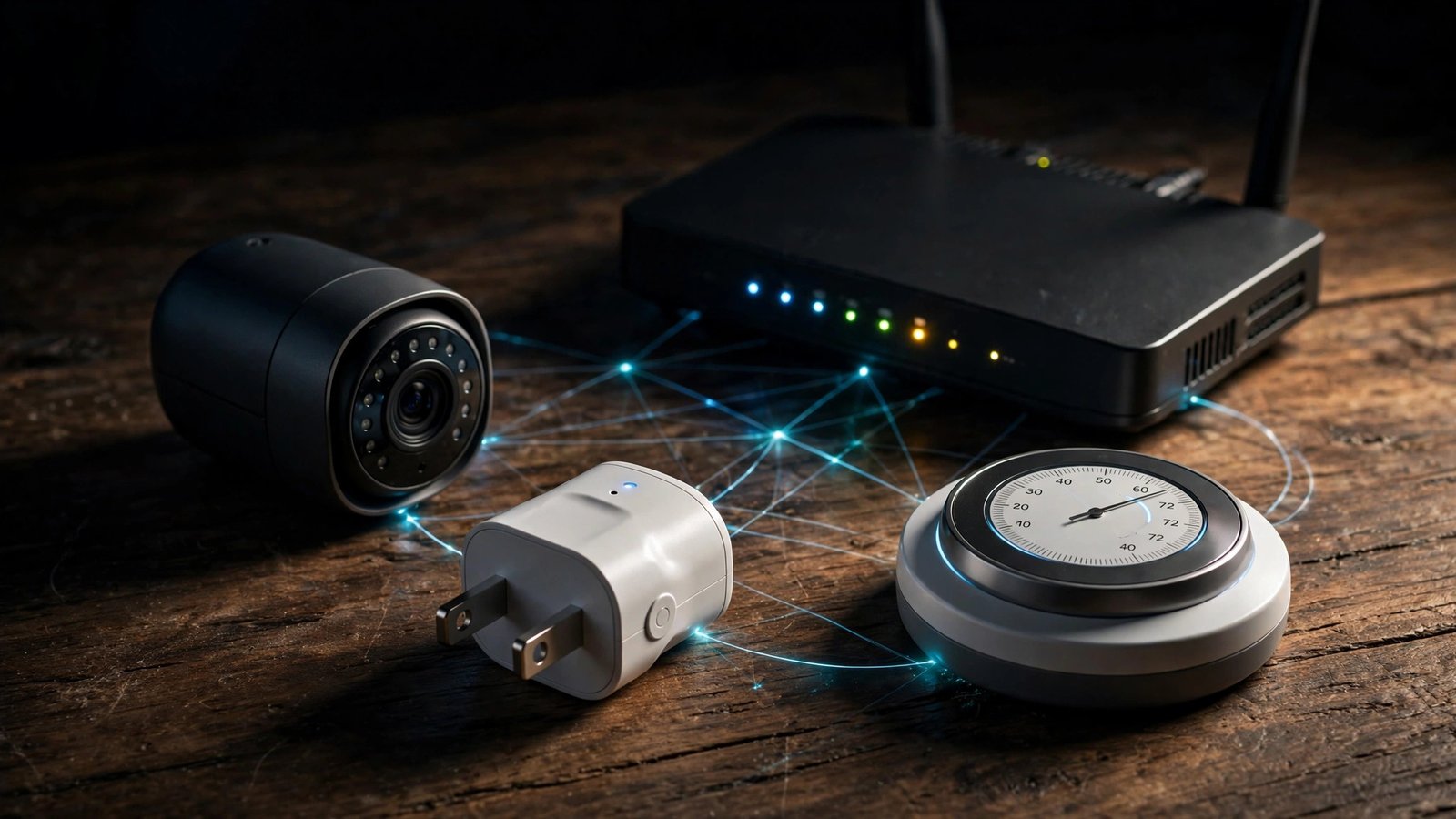
Anthropic said a self-replicating AI worm would be “challenging to shut down” because it has no central host. Unlike ordinary malware, the researchers said, it could also work out how to operate unfamiliar devices on its own.
“Home and small business IoT devices might be the first target for such attacks because they’re connected to the internet and, historically, have had minimal security measures in place,” researchers William Zhou and Daniel Freeman wrote.

There was some encouraging news for defenders. The researchers found that a self-replicating model leaves a visible network signature, such as multi-gigabyte payloads and sustained traffic between devices, and that quarantining infected devices cleared the infection within 14 days. Anthropic also said such systems would likely spread slowly, since each copy takes substantial time.
Roman V. Yampolskiy, an AI and cybersecurity researcher at the University of Louisville, told Al Jazeera that an AI worm could reason about unfamiliar devices, adapt when an approach fails and keep spreading without an operator. “Today, this is not an existential threat. But the trajectory is concerning,” he said.
Anthropic projected that if small models keep improving at their recent rate, they could replicate autonomously by the end of 2026, with smaller weight-based replicators following soon after.
In a separate announcement Monday, Anthropic said measures it had introduced cut illicit extraction of its Claude models by 90 to 99 percent. The company has accused the Chinese developers DeepSeek, Moonshot and MiniMax of large-scale attempts to copy Claude, as part of its campaign against so-called distillation attacks. Anthropic did not answer Al Jazeera’s questions about the safety implications of the replication research.
Reporting based on coverage by Al Jazeera, Reuters (via CNA), Coywolf and Globe TV.