iPhone vs. Samsung Galaxy: How Apple’s and Samsung’s Phone Ecosystems Compare
iPhones run Apple's iOS and work best inside Apple's ecosystem; Samsung Galaxy phones run Android with Samsung's features across a wider range of prices. Here's how they actually differ.
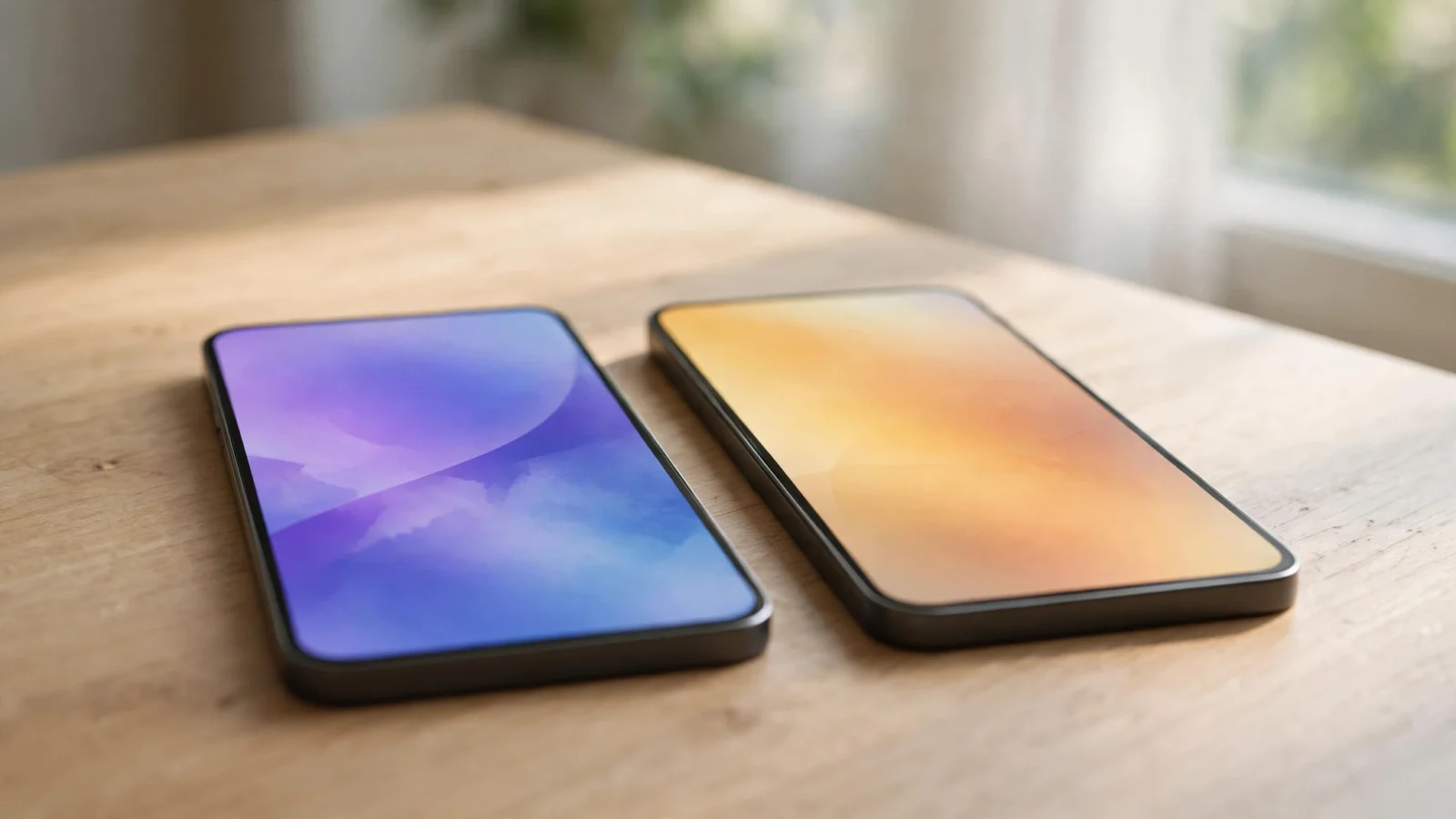
The iPhone and the Samsung Galaxy are the two names Americans hear most when shopping for a new phone, and they get confused for one simple reason: at the flagship level, both take great photos, run every major app, and cost about the same. The real difference is not any single phone — it is the software ecosystem, the upgrade rhythm, and how locked in you want to be.
How the iPhone works
The iPhone is Apple’s smartphone line, sold since 2007. Every iPhone runs iOS, Apple’s own operating system, and Apple designs both the hardware and the software. That tight pairing is the whole pitch: buy apps and services through the App Store, sign in with one Apple Account, and everything — texts, photos, files, passwords — syncs across a Mac, iPad, Apple Watch, and AirPods. iMessage, FaceTime, and AirDrop work only with other Apple devices, which is why families and friend groups that are “all iPhone” rarely switch. Apple historically supports each iPhone with iOS updates for five to six years, and iPhones hold their resale value well. Since the iPhone 15, all new iPhones charge over USB-C, and Apple added RCS messaging support in iOS 18, so texts between iPhones and Android phones now carry high-resolution photos and read receipts instead of degrading to old-style SMS.
How Samsung Galaxy phones work
Galaxy is Samsung’s smartphone brand, and Galaxy phones run Android — Google’s operating system — with Samsung’s own One UI interface layered on top. Samsung is both the world’s largest phone maker and a component supplier, so Galaxy phones are often first to market with new display and camera hardware. The lineup is much wider than Apple’s: the Galaxy A series covers budget phones costing a few hundred dollars, the Galaxy S series is the mainstream flagship line, and the Galaxy Z Fold and Z Flip are folding phones Apple does not offer. Ultra models include the built-in S Pen stylus, and Samsung’s Galaxy AI suite bundles on-device and cloud AI features. Samsung now promises up to seven years of operating-system and security updates for its recent flagship Galaxy S phones — a policy it announced with the Galaxy S24 series — and Knox, its hardware-backed security platform, ships on every model. Because it is Android, a Galaxy phone syncs with Google’s apps and plays nicely with Windows PCs, Chromebooks, and any brand of smartwatch or earbuds.
Side-by-side comparison
| iPhone | Samsung Galaxy | |
|---|---|---|
| What it is | Apple’s smartphone line, one family of phones running Apple’s iOS, sold only by Apple with the App Store as the single app source. | Samsung’s smartphone brand, running Google’s Android with Samsung’s One UI; sold in budget (Galaxy A), flagship (Galaxy S), and foldable (Galaxy Z) tiers. |
| Who it’s for | Buyers already in Apple’s ecosystem — Mac, iPad, Apple Watch, AirPods owners — or anyone who values simplicity, long update support, and strong resale value. | Buyers who want choice across price points, Android’s customization, first-in-market hardware like folding screens and stylus phones, or tighter ties to Google and Windows. |
| Costs | Current flagship iPhones typically start near $800; there is no budget iPhone tier, though Apple sells older generations at lower prices. (Model prices change every year — check Apple’s current lineup.) | Range is the selling point: Galaxy A phones often start under $300, flagships start near $800, and foldables run well over $1,000. (Model prices change every year — check Samsung’s current lineup.) |
| Pros | One account syncs everything across Apple devices; iOS updates arrive for five to six years; apps are tightly vetted; iMessage and AirDrop are seamless within Apple households; iPhones keep strong trade-in and resale value. | A phone at nearly every price; Android is highly customizable; often first with new hardware (foldables, periscope zoom, high-refresh displays); up to seven years of updates promised on recent flagships; works with Google, Windows, and any accessory brand. |
| Cons | No budget tier and no foldable; iMessage, FaceTime, and AirDrop don’t work outside Apple devices; less customization; repairs outside Apple’s network can be harder. | Android updates still roll out slower than Apple’s, varying by carrier; Samsung ships two app stores and duplicate apps (Google’s and Samsung’s); the sheer number of models can make choosing one confusing. |
The verdict: which one fits you
Choose the iPhone if most of your devices and people are already Apple — a Mac on the desk, an Apple Watch on the wrist, family group chats on iMessage. The payoff is that everything just syncs, the phone stays current for years, and it keeps its value if you trade it in. It is the low-maintenance choice.
Choose a Samsung Galaxy if you want a budget phone that still runs the full app ecosystem, you like to customize how your phone looks and works, you want a foldable or a stylus, or your digital life runs on Google and Windows. The A series in particular is the strongest argument in the lineup: genuinely affordable Android with years of promised security updates.
And if you’re already happy where you are? Switching ecosystems is the expensive part — repurchased apps, new chargers and accessories, re-learned habits — so the best phone for most people is usually the one that matches what they already own.
Explainer based on product and support documentation published by Apple, Samsung, and Google (Android). Prices and model lineups change annually.