IMF Projects Middle East and Central Asia Economy to Shrink 0.3% in 2026 as Hormuz Disruption Drags On
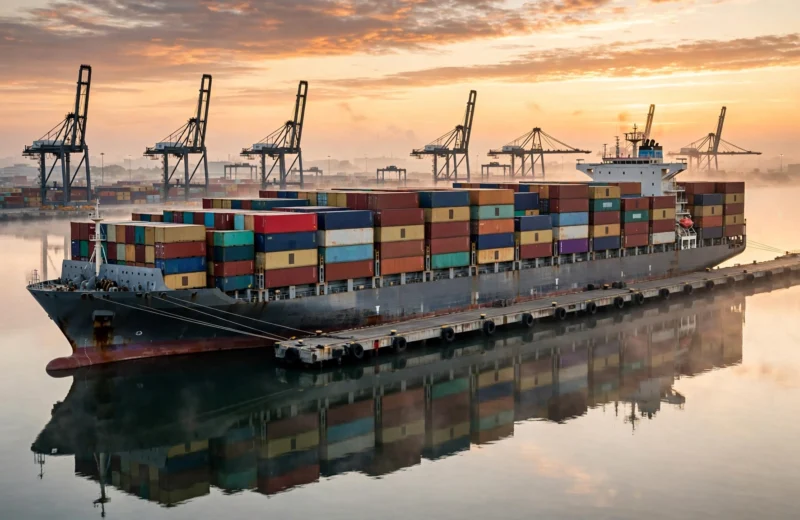
The IMF projects the Middle East and Central Asia economy will shrink 0.3% in 2026, after cutting its forecast sharply, as the prolonged closure of the Strait of Hormuz disrupts oil exports and trade.

The Middle East and Central Asia economy is projected to contract 0.3% in 2026, the International Monetary Fund said Tuesday, as the prolonged closure of the Strait of Hormuz disrupts oil exports and trade.

The forecast appears in the IMF’s October World Economic Outlook, released in Bangkok. It cuts 2.2 percentage points from the 1.9% expansion the Fund projected in April. The IMF blamed the downgrade on a longer-than-expected shutdown of the strait, which carries about one-fifth of the world’s oil supply in peacetime.
The U.S.-Israel conflict with Iran has entered its eighth month, and commercial shipping through Hormuz remains disrupted, according to Finance Middle East. The IMF assumes the waterway reopens in March 2027, with conditions returning to pre-war levels over the following year. On that basis, the region’s economy would grow 6.3% in 2027.
Gulf states face the sharpest losses
The IMF expects the steepest declines among smaller Gulf oil and gas producers, whose output and export routes are exposed to the shipping restrictions. Bahrain, Iraq, Kuwait and Qatar are projected to suffer double-digit economic contractions in 2026, followed by double-digit recoveries in 2027 as energy production, exports and logistics return to normal, according to the IMF.
Saudi Arabia is expected to fare better because of more diversified export routes, including the East-West pipeline that lets the kingdom ship crude to its Red Sea coast and bypass Hormuz. The IMF still forecasts a 3.3% contraction for the Saudi economy this year, followed by growth of nearly 8% in 2027. Oman is the only Gulf economy expected to avoid contraction.
Energy prices stay elevated
Crude oil prices are expected to average 41% higher in 2026 than in 2025, while natural gas prices are projected to rise 48%, according to the IMF’s extrapolation of data from September 21.
Despite the energy shock, the IMF left its global growth outlook largely unchanged. The Fund pointed to steps the industry took to blunt the disruption, including rerouted exports, higher production outside the Gulf and inventories drawn down. A global investment boom driven by artificial intelligence has also supported economic activity and trade, the IMF said.
The United States economy is forecast to grow 2.3% in 2026, China 4.5% and the eurozone 1.1%. Global GDP is expected to expand 3.1%.
The Fund’s assumptions do not account for a fresh risk: renewed attacks by Yemen’s Houthi militia on Saudi energy facilities and civilian infrastructure in recent weeks, including Riyadh’s main international airport. The attacks caused deaths and injuries and raised questions about investor confidence and the kingdom’s aviation sector, according to Finance Middle East.
Reporting based on coverage by Finance Middle East.