Johnson & Johnson Beats Earnings Estimates, Plans Mid-2027 Spinoff of Orthopedics Unit as Shares Fall
The drug and device maker reported adjusted profit of $2.59 a share on $25.4 billion in quarterly sales, lifted full-year guidance and said it remains on track to spin off its DePuy Synthes orthopedics business in mid-2027. Weak medical device sales sent the stock down 5.7%.

Johnson & Johnson reported third-quarter profit that beat Wall Street expectations on Tuesday, helped by strong sales of its immune disease drug Tremfya, but shares still dropped as weakness in its medical device business overshadowed the results.

Adjusted earnings came in at $2.59 a share on $25.4 billion in revenue, topping analysts’ forecasts for $2.52 a share and $25.28 billion in sales, according to Investor’s Business Daily. Revenue rose 5.9% from a year earlier.
Pharma beats, devices miss
Sales of innovative medicines jumped 7.7% to $16.76 billion. Tremfya, used to treat Crohn’s disease and other autoimmune conditions, posted a 68% sales gain to $2.4 billion, exceeding analyst estimates of about $2.2 billion. Older drug Stelara, facing generic competition, fell 54% to $716 million but still topped diminished expectations of $591 million, while blood cancer drug Darzalex rose about 16% to $4.24 billion, short of the $4.4 billion analysts expected.
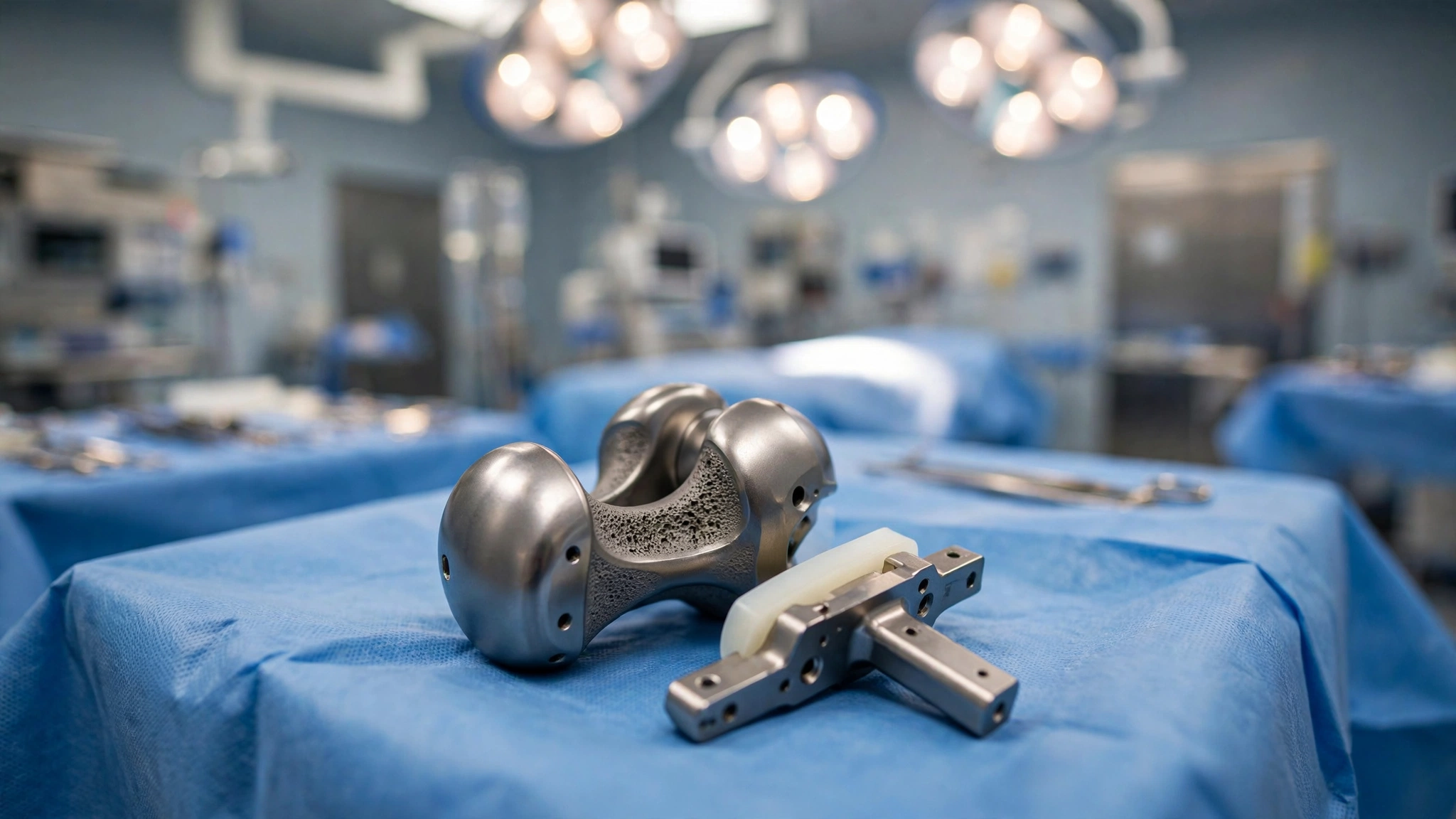
The miss came from medical technology, where sales grew a tepid 2.5% to $8.6 billion against estimates of $8.71 billion, and international sales outside the U.S. were basically flat, according to Reuters. J.P. Morgan analyst Chris Schott said the shortfall was largely in cardio and surgery products; Guggenheim analyst Vamil Divan called the medtech results “somewhat disappointing.” The orthopedics business rose 3.4% to $2.34 billion and vision products added $1.46 billion.
Middle East conflict weighs on device sales
Chief Financial Officer Joe Wolk told Reuters that the Middle East conflict, austerity measures in Europe and pricing pressure in China weighed on results outside the U.S. in a more pronounced way this quarter. Countries such as Kuwait, the United Arab Emirates and Saudi Arabia still want premium health care, Wolk said, “but their budgets now are being resourced and allocated towards defense.”
The company remains on track to separate its DePuy Synthes orthopedics unit by mid-2027, Wolk said on the earnings call, and is leaning toward a spin-off rather than a sale. “Given the way DePuy Synthes is performing… we are leaning towards a spin as being the best option to create long-term value for Johnson & Johnson shareholders,” Wolk said. Bloomberg News reported in September that Apollo Global Management was in talks to acquire the business in a deal that could value it near $20 billion. The separation would be J&J’s second major spinoff after it separated its consumer health division into Kenvue in 2023.

Raised guidance, falling stock
J&J lifted its full-year outlook, now expecting adjusted earnings of $11.05 to $11.15 a share on $101 billion to $101.4 billion in sales, the first year in which company sales would top $100 billion. The guidance disappointed some: RBC Capital Markets analyst Trung Huynh noted the company beat the quarter by 10 cents a share but raised the year by only 6 cents, suggesting the outlook could prove conservative. He rates the stock outperform with a $290 price target.
Investors focused on the device miss. The stock closed down 5.7% at $248.61 on Tuesday.
Reporting based on coverage by Reuters and Investor’s Business Daily.