Supertanker Ablaze in Strait of Hormuz Hours After US Strikes Blockade-Running Ship
A supertanker caught fire in the Strait of Hormuz on Sunday after being struck by an unknown projectile, hours after U.S. forces disabled a Panama-flagged ship trying to break the American naval blockade of Iran.
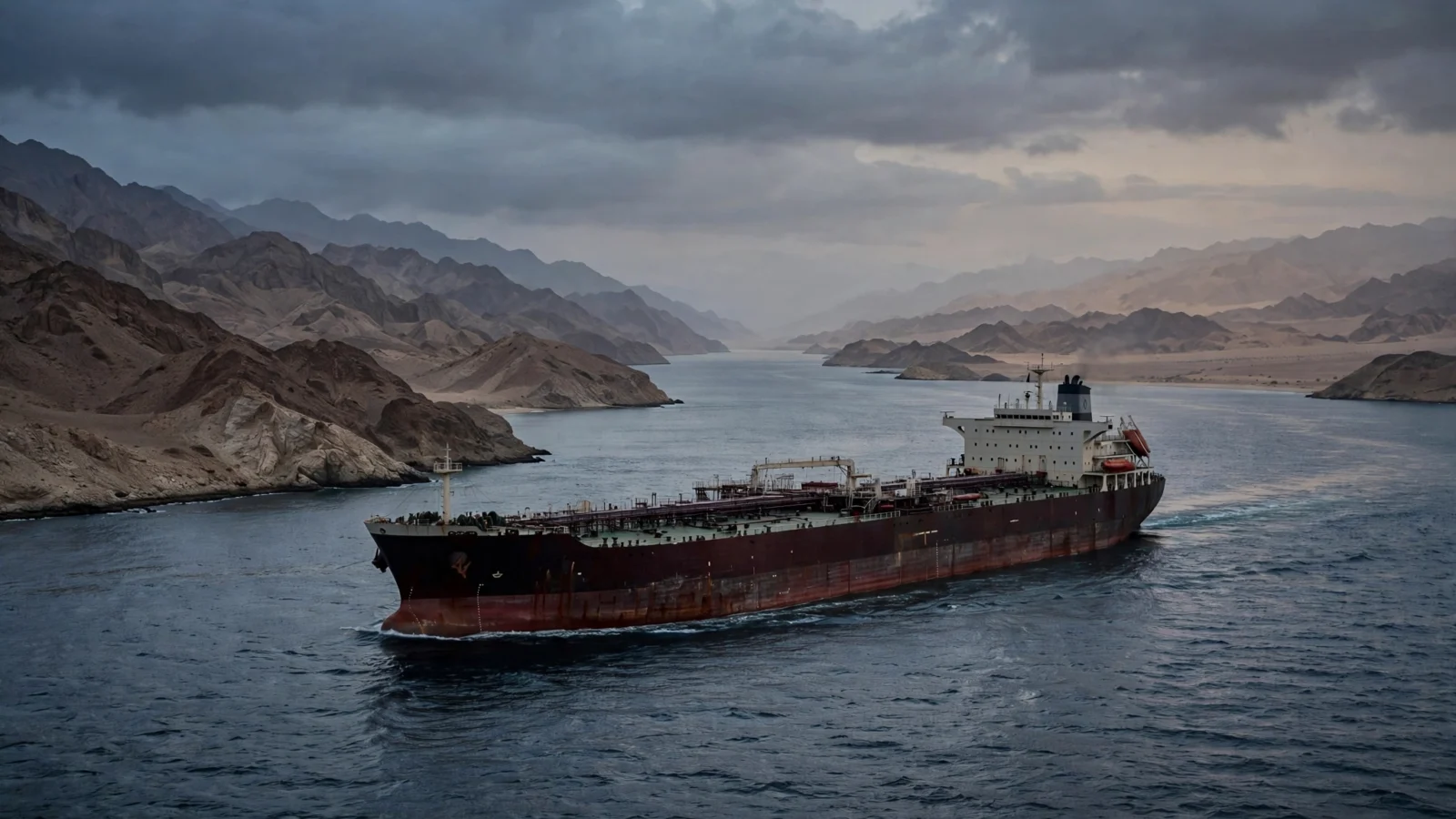
A supertanker caught fire in the Strait of Hormuz on Sunday after being struck by an unknown projectile on its port side, according to the United Kingdom Maritime Trade Operations (UKMTO) — just hours after the U.S. military confirmed it had disabled a commercial ship attempting to break its naval blockade of Iran.
The cause of the blast remains under investigation. Iran’s Islamic Revolutionary Guard Corps (IRGC) claimed the tanker hit one of its naval mines and exploded. The IRGC shared video of the vessel ablaze and warned, in a statement reported by the New York Post, that “a devastating fire is the fate of any tanker that violates the rules and disregards security in the Strait of Hormuz.”
U.S. strike on blockade-runner
Hours earlier, U.S. Central Command said a fighter jet struck the stern of the Panama-flagged M/V Ocean Molica — also known as the “Arika Sun” — with a precision munition, fully disabling the ship’s propulsion without harming the crew. According to CENTCOM, the vessel had docked at an Iranian port and was trying to leave the region for international waters after ignoring repeated warnings. It is the fourth ship U.S. forces have disabled since the naval blockade was renewed roughly three months ago, with another 135 vessels turned around, the Post reported.
The exchange marks a sharp escalation in the shipping war inside the world’s most important oil chokepoint. The U.N.’s International Maritime Organization says at least 11 tankers came under attack during the week that ended Oct. 4 — the most strikes on commercial ships in the strait since the war began on Feb. 28. Another 10 strikes followed last week, including one on Monday that left 12 Indian sailors injured aboard the UAE-owned On Peace oil tanker.
Oil flows and Tehran’s warnings
The IRGC’s head, Ahmed Vahidi, wrote on X that “no extra-regional power has the right to threaten, maintain a domineering presence, or interfere” in the strait, calling it Iran’s “strategic red line,” according to CNN. UKMTO separately reported that vessels in UAE waters were ordered over VHF radio to leave their anchorages; shipping analysts at Ambrey said the IRGC Navy told six ships near Ras al Khaimah to weigh anchor and head for Dubai.
Despite the attacks, crude has continued to move: data from Kpler showed flows averaging about 13.1 million barrels per day at the end of September, just under 80% of the 17.1 million barrels a day that transited the strait before the war. But traffic appears to be slowing — just seven tankers made the crossing on Tuesday, the lowest single-day number since July 23, according to CNN.
Reporting based on coverage by the New York Post and CNN.